

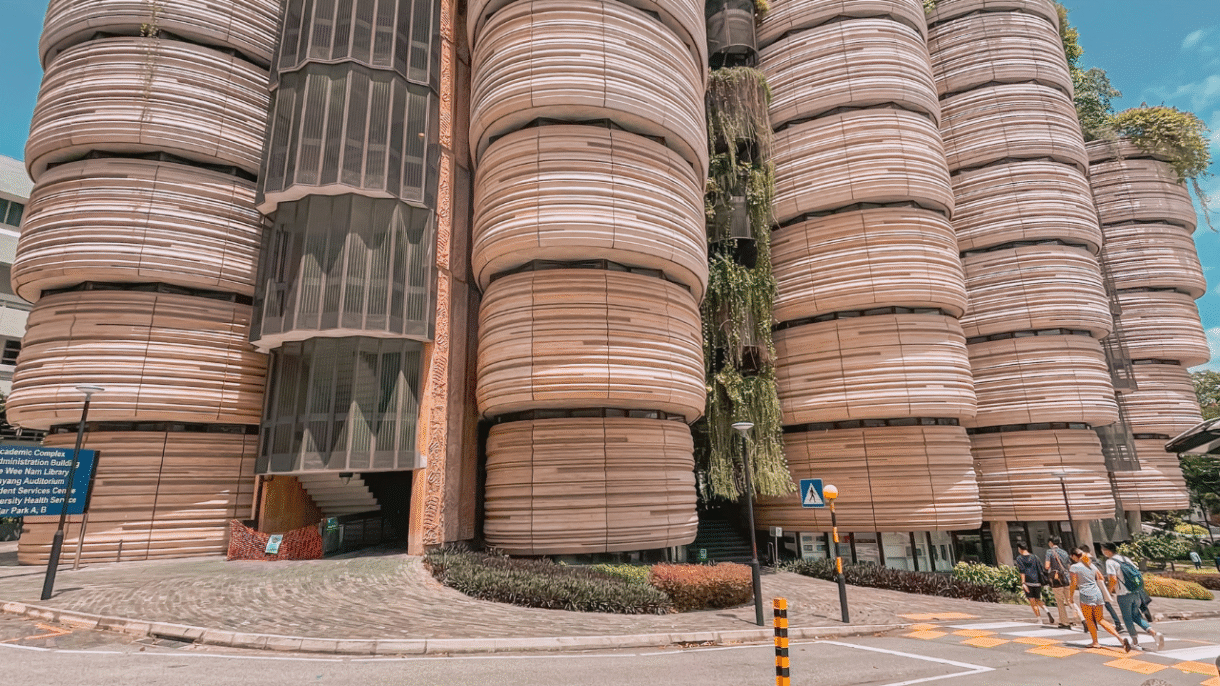
Choosing among the top universities in Singapore and understanding tuition fees is an important step for international students planning to study abroad in 2026-27. Singapore offers a mix of established public universities, specialised institutions and international university campuses, giving students options across business, computing, engineering, science, technology and other fields.
Tuition fees vary significantly depending on the university, programme, nationality, tuition-grant eligibility and study level. For example, published 2026 figures at leading institutions show different fee structures for international students, while private and international institutions may use programme-based fees rather than the annual fee structures used by some public universities.
This guide explains the major universities to consider, gives an overview of their published 2026 tuition fees, and highlights the factors students should check before applying.
Why Study at a University in Singapore?
Singapore has developed a strong higher-education sector with universities offering programmes that combine academic study with practical and industry-oriented learning. Its location in Asia also makes it an attractive destination for students interested in business, technology, finance, engineering, computing and other professional fields.
Students can consider different types of institutions depending on their academic profile and career objectives.
Key factors include:
-
- University reputation and programme structure
-
- Course specialisation
-
- Tuition fees and available financial support
-
- Internship and industry exposure
-
- Entry requirements
-
- Location and campus facilities
-
- Duration of the programme
- Opportunities available after graduation
Rather than choosing a university only because of its overall reputation, students should compare the specific programme they want to study.

Top Universities in Singapore for 2026-27
National University of Singapore
The National University of Singapore (NUS) is one of Singapore’s major public universities, with programmes across areas such as computing, business, engineering, science, medicine, humanities and social sciences.
For AY2026/27, NUS publishes different tuition rates according to programme and student category. For example, its published undergraduate fee table shows that international students receiving the applicable MOE Tuition Grant pay approximately S$18,050 per year for Computing, while the corresponding fee for international students not receiving the grant is approximately S$39,700. Other programmes have different fee levels.
This makes it important to check the fee for the exact course rather than using one university-wide figure.
Suitable for students interested in:
-
- Computing and technology
-
- Engineering
-
- Business
-
- Science
-
- Research
-
- Interdisciplinary study
Nanyang Technological University
Nanyang Technological University (NTU) is another major public university in Singapore, with strong offerings in engineering, business, computing, science, humanities and other disciplines.
For students accepting undergraduate programme offers in 2026, NTU publishes different tuition levels according to programme, nationality and whether the student receives the applicable tuition grant. For many programmes, the published annual fee for international students receiving the subsidy is approximately S$21,400 for non-ASEAN international students, while non-subsidised fees can be substantially higher. Certain programmes have different rates.
Students should therefore confirm the fee category applicable to their offer before preparing their financial plan.
Popular study areas include:
-
- Engineering
-
- Computer science
-
- Business
-
- Data and technology
-
- Sciences
-
- Communication and humanities
Singapore Management University
Singapore Management University (SMU) is particularly known for business, management, economics, law, social sciences and computing-related programmes.
For AY2026/27, SMU lists an annual tuition fee of approximately S$26,200 for other international students receiving the applicable subsidised fee for several undergraduate programmes, including Business Management, Computer Science, Software Engineering and Information Systems. The published non-subsidised fee for those programmes is approximately S$47,700 per year.
SMU can be considered by students interested in:
-
- Business management
-
- Finance and economics
-
- Computer science
-
- Software engineering
-
- Information systems
-
- Social sciences
-
- Law
Singapore University of Technology and Design
Singapore University of Technology and Design (SUTD) focuses strongly on technology, design, engineering and interdisciplinary education.
For AY2026, SUTD lists an international-student tuition fee of approximately S$31,600 per academic year for eligible international students under its published subsidised fee category, while the non-subsidised fee is approximately S$62,076. These figures apply to the undergraduate fee structure shown by SUTD and should not be assumed to apply to every postgraduate programme.
SUTD also offers postgraduate programmes. For example, its Master of Science in Security by Design has a published AY2026 non-subsidised tuition fee of approximately S$52,086 for the full-time programme.
Relevant areas include:
-
- Computer science
-
- Engineering
-
- Design
-
- Artificial intelligence
-
- Cybersecurity
-
- Data and technology
Singapore University of Social Sciences
Singapore University of Social Sciences (SUSS) offers programmes in areas such as business, information and communication technology, finance, psychology, human resource management and public safety and security.
For AY2026, SUSS estimates total tuition fees over four years for international students receiving the applicable subsidy at approximately S$76,800 for many of its non-accountancy undergraduate programmes. Accountancy is listed at approximately S$82,000 under the same category. Fees are different for students who do not receive the applicable subsidy.
This structure demonstrates why international students should check both the programme and their tuition-grant status before comparing universities.
James Cook University Singapore
James Cook University Singapore provides programmes linked to the wider James Cook University system and offers undergraduate and postgraduate study options.
Its published fee information lists international tuition fees of approximately S$70,893.60 for the Bachelor of Business and approximately S$71,678.40 for the Bachelor of Arts in Psychology Studies. Other programmes have different total fees.
Students considering JCU Singapore should also account for international student registration and other applicable charges.
Study areas include:
-
- Business
-
- Psychology
-
- Information technology
-
- Hospitality and tourism
-
- Environmental science
-
- Science
PSB Academy
PSB Academy is a private education institution in Singapore rather than one of Singapore’s autonomous public universities. It works with overseas university partners to offer degree and postgraduate pathways.
Its 2026 international student materials show programmes across areas such as cybersecurity, information technology, business and other disciplines. For example, the academy lists a Postgraduate Diploma in Cyber Security with an estimated fee of approximately S$4,708.80 for its e-learning format. Its 2026 materials also show study grants for selected programmes, subject to terms and conditions.
Students should distinguish between the academy and the overseas university awarding a particular qualification when comparing programmes.
This article is for educational and informational purposes. University admission requirements, tuition fees, visa rules, scholarships, immigration policies and post-study opportunities may change. Students should verify the latest information with the relevant university, government authority, immigration department, embassy or official source before making a decision.
Singapore University Tuition Fees for International Students
There is no single tuition fee applicable to every university or course in Singapore. Fees can change according to the programme, academic year, student nationality and tuition-grant status.
A simplified overview is:
| University / Institution | Example 2026 fee information for international students | Study level / context |
|---|---|---|
| NUS | Approximately S$18,050 per year for Computing with applicable Tuition Grant; non-subsidised fee approximately S$39,700 | Undergraduate example |
| NTU | Approximately S$21,400 per year for many non-ASEAN programmes with applicable subsidy; higher without subsidy | Undergraduate examples |
| SMU | Approximately S$26,200 per year for several programmes with applicable subsidy; non-subsidised approximately S$47,700 | Undergraduate examples |
| SUTD | Approximately S$31,600 per year under the published international subsidised category; non-subsidised approximately S$62,076 | Undergraduate |
| SUSS | Approximately S$76,800 total over four years for many non-accountancy programmes under the applicable international subsidy | Undergraduate |
| JCU Singapore | Approximately S$70,893.60 total for Bachelor of Business for international students | Undergraduate |
| PSB Academy | Fees vary by programme and awarding university; selected 2026 programmes have separate published fees | Undergraduate/Postgraduate |
These are representative published 2026 figures, not universal prices. Students should verify the fee for their exact programme, intake and student category before making financial commitments.
What Affects University Fees in Singapore?
Several factors can change the amount you need to budget for.
1. Programme
Business, computing, engineering, medicine, design and other fields can have different fee structures.
2. Tuition Grant
Some public universities publish separate tuition rates depending on whether an international student receives the applicable MOE Tuition Grant. The subsidised and non-subsidised amounts can differ considerably.
3. Nationality
Singapore universities may use different fee categories for Singapore citizens, permanent residents, ASEAN international students and other international students.
4. Study Level
Undergraduate, postgraduate taught and research programmes generally have separate fee structures.
5. Programme Duration
A one-year master’s programme and a four-year bachelor’s programme naturally require different overall financial planning.
How to Choose the Right Singapore University
Tuition fees are important, but they should not be the only factor in your decision.
Consider the following before applying:
Course relevance:
Check the curriculum, modules, specialisations and practical components.
Academic requirements:
Review the required academic qualifications, English-language requirements and any programme-specific prerequisites.
Total study cost:
Compare tuition with accommodation, food, transportation, insurance, study materials and other expenses.
Career alignment:
Look at the skills developed by the programme and the types of industries connected with the course.
University type:
Understand whether you are applying directly to a Singapore autonomous university, a private education institution or a Singapore campus delivering a qualification from an overseas university.
Financial support:
Check scholarships, grants, tuition subsidies and university-specific financial assistance where applicable.
Other Costs to Budget For
Tuition is only one part of the cost of studying in Singapore.
International students should also plan for:
-
- Accommodation
-
- Food and groceries
-
- Public transportation
-
- Health insurance
-
- Student pass-related expenses
-
- Study materials
-
- Personal expenses
-
- Mobile and internet costs
-
- Travel expenses
- Emergency funds
The actual amount depends heavily on accommodation type, lifestyle and location. Students should create a monthly budget before accepting an offer.
Application Tips for International Students
Follow a structured approach when applying to universities in Singapore:
-
- Shortlist programmes based on your academic background and career goals.
-
- Check the university’s official admission requirements.
-
- Review the tuition fee for your exact programme and intake.
-
- Check whether tuition grants or scholarships are available and whether you are eligible.
-
- Prepare academic transcripts and other required documents.
-
- Check English-language requirements if applicable.
-
- Submit the application within the university’s stated timeline.
-
- Review the offer carefully, including programme duration and fee conditions.
-
- Plan accommodation and living expenses.
- Complete the applicable student immigration requirements after receiving the necessary admission documentation.
Admission to a university and approval of immigration permission are separate processes. Students must satisfy the requirements applicable to both.
 Frequently Asked Questions
How much are tuition fees in Singapore for international students?
Tuition fees vary substantially by university and programme. Published 2026 examples range from tens of thousands of Singapore dollars per year for some public-university programmes to higher overall programme costs for certain private and international university programmes.
Is Singapore expensive for international students?
Singapore can have relatively high living costs, particularly for accommodation. Students should calculate tuition and living expenses together rather than considering tuition fees alone.
Can international students receive tuition subsidies?
Some Singapore universities have government-supported tuition subsidy or grant structures for eligible international students. Eligibility and conditions vary, so students should check the university’s current requirements.
Which Singapore universities offer technology and computing programmes?
NUS, NTU, SMU and SUTD all offer programmes connected with computing, technology or related disciplines. Other institutions also provide IT and cybersecurity-focused programmes.
Are private institutions different from Singapore’s public universities?
Yes. Singapore’s autonomous universities have their own government-supported fee structures, while private education institutions can offer programmes through partnerships with overseas universities. Students should check who awards the qualification and understand the specific programme structure.
Key Takeaways
The top universities in Singapore offer different academic environments, programmes and tuition structures for international students. NUS, NTU, SMU, SUTD and SUSS are important public-university options, while institutions such as James Cook University Singapore and PSB Academy provide additional pathways.
When comparing Singapore university tuition fees, look beyond the headline figure. Check your exact course, nationality category, tuition-grant eligibility, programme duration and additional study expenses. A university that fits your academic background, career plans and overall budget can make your study-abroad journey more manageable.
-
- Singapore offers public, private and international university pathways.
-
- Tuition fees vary by programme and student category.
-
- Government tuition grants can affect the amount payable by eligible international students.
-
- NUS, NTU, SMU, SUTD and SUSS publish different 2026 fee structures.
-
- JCU Singapore and PSB Academy provide additional options outside the autonomous university system.
-
- Students should calculate tuition and living costs together.
-
- Always check the latest official university information before applying.
Start Your Study Abroad Journey
If you are planning to study abroad and need help understanding your options, you can connect with a LetzStudy counsellor for personalised guidance. We can help you explore suitable countries, universities, courses, eligibility requirements, application steps and other aspects of your study-abroad journey based on your academic profile and goals.
Book a Free Consultation.
