

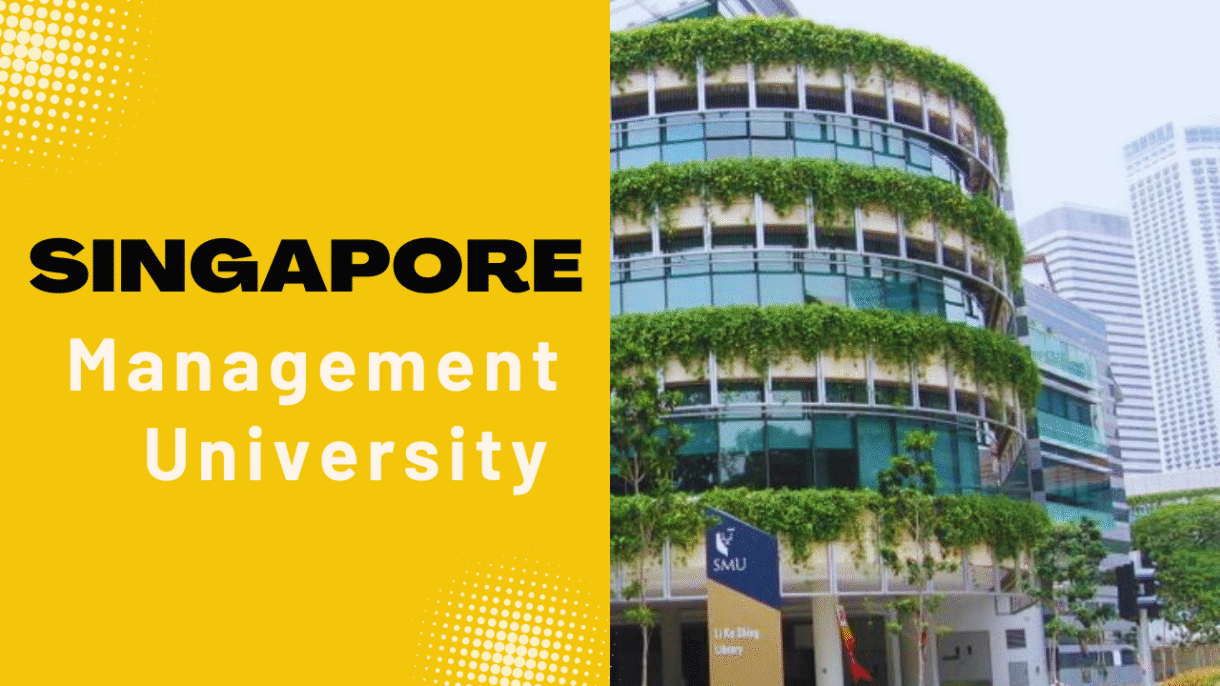
Singapore Management University (SMU) is one of Singapore’s leading universities for students interested in business, management, economics, computing, accountancy, law and social sciences. Located in central Singapore, the university combines seminar-style teaching with internships, industry exposure and interdisciplinary study.
For students considering Singapore Management University (SMU) in 2026, admission can be competitive, particularly for international applicants. Indian students can apply using recognised Standard 12 qualifications such as CBSE, ISC and state board examinations, but academic results are only one part of the selection process.
This guide explains SMU courses, admission requirements, tuition fees, scholarships, application dates, living costs, rankings and career opportunities for students planning to study in Singapore.
Key Takeaways
-
- SMU was established in 2000 and operates a city campus in central Singapore.
-
- Undergraduate options cover business, accountancy, economics, computing, law, social sciences and interdisciplinary studies.
-
- Indian Standard 12 applicants are expected to meet strong academic requirements, with SMU listing at least 90% across five subjects including English as the minimum level to apply.
-
- AY2026/27 international applications closed on 19 March 2026.
-
- Tuition for most international undergraduate students receiving the Singapore Tuition Grant is approximately S$26,200 per year.
-
- International students may qualify for selected SMU scholarships, including opportunities specifically open to Indian computing students.
Singapore Management University at a Glance
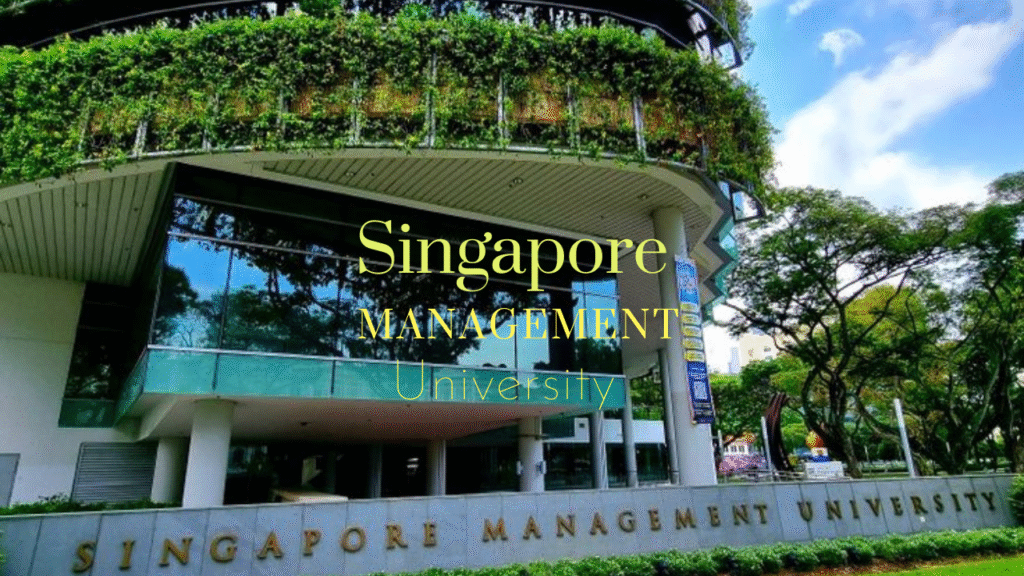
Singapore Management University was established in January 2000 and is located in Singapore’s Bras Basah civic district. The university’s academic structure includes schools and colleges covering accountancy, business, economics, computing, law, social sciences, integrative studies and graduate research.
As of September 2025, SMU reported more than 10,000 full-time undergraduate students and more than 3,700 full-time and part-time postgraduate students. Its campus is integrated into downtown Singapore rather than being located in a traditional suburban university setting.
SMU is particularly known for interactive classes, project-based learning, interdisciplinary education and strong links with employers and industry.
Why Study at SMU Singapore in 2026?
SMU may appeal to students who prefer an interactive university environment rather than mainly lecture-based learning. Its academic model places considerable emphasis on presentations, group projects, internships, communication skills and applied problem-solving.
Academic Reputation and 2026 Rankings
SMU recorded significant gains in the QS World University Rankings by Subject 2026.
Its Business & Management Studies subject was ranked 39th globally, while Accounting & Finance reached 50th globally. SMU’s Law subject was ranked 56th globally in the same 2026 subject rankings.
These are subject-specific rankings rather than a single overall university ranking, which is important when comparing SMU with larger multidisciplinary universities.
City-Campus Learning Experience
SMU’s downtown campus places students close to Singapore’s business, financial, government and cultural districts.
The university’s location can be useful for students interested in business networking, internships, entrepreneurship and industry events. Its campus has also been designed around collaborative and seminar-style learning rather than only large lecture halls.
Career and Internship Opportunities
SMU requires undergraduate students to complete an internship as part of their educational experience. The university states that students complete at least one ten-week internship before graduation.
According to SMU’s 2025 Graduate Employment Survey results released in 2026, approximately 91.4% of surveyed graduates secured employment within six months of graduation.
The reported mean gross monthly salary was approximately S$5,116, while the median was approximately S$4,747. These figures describe survey outcomes and should not be interpreted as guaranteed salaries for future graduates.
Undergraduate Courses at Singapore Management University
SMU offers undergraduate programmes across business, technology, economics, law and social sciences.
| Undergraduate Programme | Main Academic Area |
|---|---|
| Bachelor of Accountancy | Accounting, finance and business |
| Bachelor of Business Management | Management, finance, marketing and business |
| Bachelor of Science in Economics | Economics and quantitative analysis |
| Bachelor of Science in Information Systems | Business technology and information systems |
| Bachelor of Science in Computer Science | Computing, AI, cybersecurity and software systems |
| Bachelor of Science in Computing & Law | Technology combined with legal studies |
| Bachelor of Science in Software Engineering | Software engineering with industry training |
| Bachelor of Laws | Law |
| Bachelor of Social Science | Political science, psychology, sociology and related areas |
| Bachelor of Integrative Studies | Individualised interdisciplinary study |
| Deferred Declaration of Degree | Opportunity to explore programmes before selecting a degree |
Computing students can access areas such as Frontier Artificial Intelligence, cybersecurity, software systems, financial technology, business analytics and product development depending on their programme and track. The Software Engineering degree also incorporates an extended industry apprenticeship.
SMU also gives students considerable flexibility to combine majors and, where eligible, pursue double-degree pathways.
SMU Admission Requirements for Indian and International Students
International applicants must generally have completed at least 12 years of formal education with recognised school-leaving qualifications.
Admission is competitive. Meeting a published minimum does not guarantee an interview or offer because SMU considers applicants on a selective basis.
Indian Standard 12 Requirements
SMU recognises the following Indian Standard 12 qualifications:
-
- CBSE
-
- ISC
-
- Recognised state board examinations
- Recognised state board examinations
For applicants who have completed Standard 12, SMU lists at least 90% across five subjects, including English, as the minimum academic level to apply.
Students awaiting their final Standard 12 results may apply using predicted grades or recent school results, subject to SMU’s conditions. Predicted results must be properly attested by the school rather than self-declared.
The 90% threshold is therefore a minimum application requirement rather than a guaranteed admission score.
SAT, ACT and English-Language Test Requirements
Applicants using international qualifications are required to submit an accepted standardised test such as SAT, ACT, IELTS, TOEFL, PTE Academic, C1 Advanced or AST.
For non-Law programmes, published minimums for the 2026 admission exercise included:
| Test | Minimum Requirement for Non-Law Programmes |
|---|---|
| SAT | 1,350 overall, including at least 650 Evidence-Based Reading and Writing |
| ACT | Composite 29, including English + Reading score of at least 57 |
| IELTS Academic | Overall 7.0, including at least 7.0 Reading and 6.5 Writing |
| PTE Academic | Overall 66, including at least 66 Reading and 56 Writing |
Law applicants face higher English-language requirements. For example, the published IELTS requirement for Law was an overall score of 7.5, including at least 7.0 in Reading and Writing.
Students only need to meet the requirements of the appropriate accepted test route rather than sitting every listed examination.
Interviews and Holistic Admissions
SMU uses a holistic admission process.
Applicants shortlisted for programmes other than Law may be invited to an interview. Law applicants who are shortlisted must complete a writing test, with selected candidates subsequently invited for an interview.
Academic performance therefore matters, but communication ability, achievements, extracurricular activities and the interview can also influence the final outcome.
SMU Application Dates and Process for 2026
For Academic Year 2026/27, applications for international and other qualifications opened on 17 November 2025 and closed on 19 March 2026.
Standardised test scores were generally required by 31 March 2026. Interviews and assessments were conducted mainly from March onwards, while admission decisions were released between approximately May and July for international applicants.
The AY2026/27 application cycle has therefore already closed. Students targeting the next intake should check SMU’s official admissions portal once the subsequent application calendar is published.
The general application process involves:
- Select your undergraduate programme and admission category.
- Complete the online SMU application.
- Upload school transcripts, Standard 12 or predicted results and identification documents.
- Submit the required standardised test results.
- Include extracurricular activities, achievements and supporting records where relevant.
- Pay the application fee of approximately S$15.
- Attend an interview or programme-specific assessment if shortlisted.
- Wait for the admission decision and accept the offer within the applicable deadline.
- SMU specifically advises applicants to upload supporting academic documents through its Applicant’s Self Service system.
Singapore Management University Fees in 2026
For AY2026/27, SMU published different tuition rates depending on nationality, programme and whether a student receives the Singapore Government’s Tuition Grant.
For an Indian student, the relevant international-student category is generally “Other International Students” rather than ASEAN International Students.
| Programme | Approx. Annual Fee With Tuition Grant | Approx. Annual Non-Subsidised Fee |
|---|---|---|
| Accountancy, Business, Economics, Computing, Social Sciences and most other undergraduate degrees | approximately S$26,200 | approximately S$47,700 |
| Bachelor of Laws | approximately S$30,450 | approximately S$56,150 |
These figures apply to the AY2026/27 entering cohort and exclude accommodation, living expenses and other student-related charges. SMU states that the entering cohort follows its published fee structure during the normal four-year candidature period, although students should always confirm current billing information before enrolment.
Tuition Grant for International Students
Eligible international students may compete for the Singapore Ministry of Education Tuition Grant.
The number of Tuition Grants available to international students is limited, and receiving one is not automatic.
International students who accept the Tuition Grant are required to work for a Singapore entity for three years after graduation. Students who do not receive or choose not to accept the grant pay the non-subsidised tuition rate and do not have that Tuition Grant service obligation.
Students should understand this condition before accepting subsidised tuition.
Cost of Living and Accommodation in Singapore
Living expenses depend heavily on accommodation type, food choices, transport and personal spending.
SMU estimates that an international student’s monthly living expenses can range from approximately S$750 to S$2,000, although actual spending can be higher depending on lifestyle and housing.
For university-linked accommodation, Prinsep Street Residences is one option for eligible full-time undergraduates.
For AY2026/27, published 11-month bed rates varied by room type at roughly S$648 to S$874 per month, before considering applicable deposits, utilities and other charges. Accommodation is limited, so an application does not guarantee a place.
Students planning their budget should therefore account separately for:
-
- Tuition
-
- Accommodation
-
- Food
-
- Transport
-
- Utilities
-
- Telecommunications
-
- Books and study materials
-
- Personal expenses
-
- Insurance and university charges
SMU Scholarships for International Students
SMU offers several scholarship opportunities for international undergraduate applicants. Eligibility differs by nationality, academic programme, financial need and achievement profile.
Lee Kong Chian Scholars’ Programme
The Lee Kong Chian Scholars’ Programme accepts eligible first-year SMU students of any nationality.
Benefits include subsidised tuition fee coverage for up to four years, an approximately S$16,000 Global Opportunities Grant, approximately S$5,000 annual living allowance and an approximately S$1,800 one-time computer allowance.
Although the scholarship itself is described as bond-free, non-Singaporean recipients must take the Singapore Tuition Grant and therefore have the associated three-year work obligation after graduation.
Science & Technology Undergraduate Scholarship
This scholarship is particularly relevant to Indian students interested in technology.
SMU specifically lists citizens of India among the eligible nationalities. Applicants must be enrolled in Computer Science, Information Systems or Software Engineering.
Benefits include coverage of subsidised undergraduate tuition, an approximately S$6,000 annual living allowance, an approximately S$1,750 computer allowance and other support.
Students should note that recipients are required to fulfil a six-year employment bond with a Singapore-registered company after graduation.
Other International Student Scholarships
International students may also find university or donor-funded scholarships such as the Dato’ Kho Hui Meng Scholarship and selected other schemes for which international students are eligible.
For example, the Dato’ Kho Hui Meng Scholarship is available to applicants of any nationality, although priority is given to certain groups. Its total support can reach approximately S$87,600 over the applicable study period, subject to eligibility and continued academic performance.
Scholarships are competitive, so students should not calculate their study budget on the assumption that an award will be received.
Student Pass and Part-Time Work in Singapore
Most international students admitted to full-time study in Singapore need a Student’s Pass unless they fall within an applicable exemption. The Student’s Pass is handled by Singapore’s Immigration & Checkpoints Authority.
International students studying full-time at SMU who hold an eligible Student’s Pass may work during the academic term without a separate work pass for up to 16 hours per week, subject to Singapore Ministry of Manpower conditions.
Qualifying internships or industrial attachments conducted as part of the university programme may also be permitted under the relevant rules. After studies are completed and the Student’s Pass expires, graduates normally need the appropriate work pass to continue working in Singapore.
What About Master’s and Postgraduate Study at SMU?
SMU also offers professional master’s programmes, research master’s programmes and PhD study across its academic areas.
Unlike undergraduate admission, postgraduate tuition fees, work-experience requirements, GMAT or GRE requirements, application rounds and deadlines vary significantly by programme.
Students considering an SMU master’s degree should therefore review the specific programme rather than applying undergraduate admission requirements to postgraduate study.
Is Singapore Management University Good for Indian Students?
SMU can be a strong option for Indian students whose academic and career goals fit areas such as business, finance, economics, accountancy, computer science, information systems, software engineering, law or social sciences.
Its main advantages include its central Singapore location, industry exposure, flexible academic pathways and strong graduate employment outcomes.
However, applicants should consider the complete financial picture before applying. International tuition can be substantial without the Tuition Grant, Singapore living expenses need careful budgeting, and accepting certain government grants or scholarships can create post-graduation work obligations.
Students should therefore compare SMU with other Singapore universities based on the specific course, academic environment, total cost and long-term career plans rather than relying only on rankings.
FAQs
Is Singapore Management University difficult to get into?
SMU admissions are competitive. Meeting the minimum academic or standardised-test requirements does not guarantee admission. Shortlisting, academic performance, achievements and interviews can all influence the decision.
What percentage is required for Indian students at SMU?
For Indian Standard 12 applicants, SMU lists at least 90% across five subjects including English as the minimum level to apply. Stronger results may be required in practice because admissions are competitive.
Is IELTS compulsory for Indian students applying to SMU?
SMU requires applicants with international qualifications to submit an accepted standardised test. IELTS is one option, but applicants may instead use another accepted examination such as SAT, ACT, TOEFL, PTE Academic, C1 Advanced or AST according to the relevant rules.
How much does SMU cost for an Indian student?
For most undergraduate programmes in AY2026/27, an international student receiving the Tuition Grant pays approximately S$26,200 per year in tuition. Without the subsidy, tuition is approximately S$47,700 per year. Law costs more. Living and accommodation expenses are additional.
Does SMU offer scholarships to Indian students?
Yes. International students can be considered for selected SMU scholarships. Indian citizens are specifically eligible for the Science & Technology Undergraduate Scholarship when entering eligible Computer Science, Information Systems or Software Engineering programmes.
Can international students work while studying at SMU?
Eligible full-time SMU students holding a valid Student’s Pass may work for up to 16 hours per week during the academic term without a separate work pass, subject to Ministry of Manpower requirements.
When was the SMU 2026 application deadline?
The application deadline for international applicants entering in Academic Year 2026/27 was 19 March 2026 at 11:59 PM Singapore Standard Time.
Key Takeaways
Singapore Management University (SMU) remains an attractive Singapore study option in 2026 for students interested in business, technology, economics, accountancy, law and social sciences.
Indian applicants should pay particular attention to SMU’s academic threshold, standardised-test requirements, competitive interview process and the financial implications of the Tuition Grant. Scholarships can reduce costs considerably, but they are selective and some carry employment obligations.
Before applying for a future intake, check the latest SMU application calendar, programme requirements and scholarship conditions and build your application well before the deadline
This article is for educational and informational purposes. University admission requirements, tuition fees, visa rules, scholarships, immigration policies and post-study opportunities may change. Students should verify the latest information with the relevant university, government authority, immigration department, embassy or official source before making a decision.
Start Your Study Abroad Journey
If you are planning to study abroad and need help understanding your options, you can connect with a LetzStudy counsellor for personalised guidance. We can help you explore suitable countries, universities, courses, eligibility requirements, application steps and other aspects of your study-abroad journey based on your academic profile and goals.
