

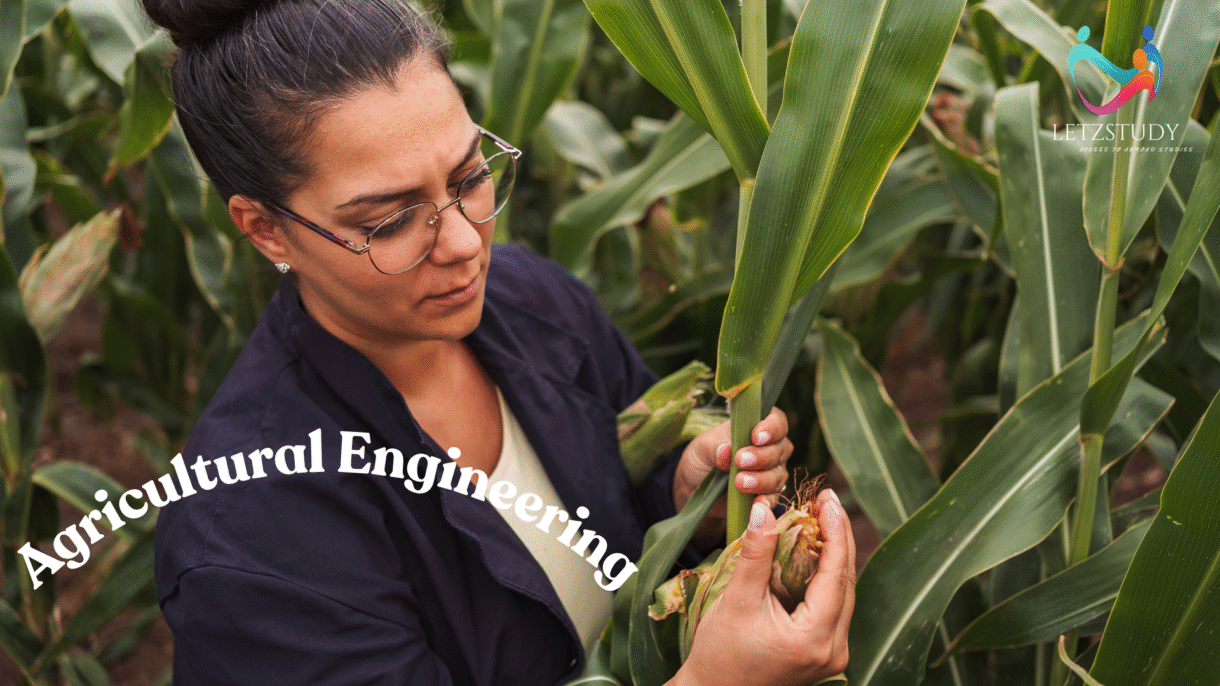
Agricultural Engineering After 12th PCM can be a strong option for students who enjoy mathematics, physics, technology and practical problem-solving but want to work in areas connected with agriculture, food systems and sustainability.
Unlike traditional agriculture courses, Agricultural Engineering applies engineering principles to farm machinery, irrigation, soil and water management, food processing, renewable energy, automation and modern agricultural systems.
PCM students are eligible for B.Tech Agricultural Engineering at many institutions in India. However, admission rules are not identical everywhere. Entrance examinations, minimum Class 12 marks and required subject combinations can vary between universities.
For the 2026-27 academic year, B.Tech Agricultural Engineering is also included among the programmes available through the CUET (ICAR-UG) admission route for participating agricultural universities.
This guide explains eligibility, entrance exams, course subjects, career options, skills and the future scope of Agricultural Engineering in 2026.
What Is Agricultural Engineering?
Agricultural Engineering is an engineering discipline that applies mechanical, civil, electrical, environmental and technological principles to agriculture and food-production systems.
An agricultural engineer may work on problems such as:
-
- designing efficient farm machinery;
-
- developing irrigation and drainage systems;
-
- improving water-use efficiency;
-
- automating agricultural operations;
-
- designing storage and processing systems;
-
- applying sensors, IoT, GIS and robotics to farming;
-
- developing renewable-energy solutions;
-
- improving post-harvest handling of agricultural products.
- improving post-harvest handling of agricultural products.
The University of Agricultural Sciences, Bengaluru, describes its B.Tech Agricultural Engineering programme as covering farm power and machinery, soil and water engineering, processing and food engineering, renewable energy, basic engineering and applied agricultural sciences.
This makes Agricultural Engineering quite different from simply studying farming.
Can You Study Agricultural Engineering After 12th PCM?
Yes. Agricultural Engineering After 12th PCM is possible at many Indian universities.
Mathematics is especially useful because the programme includes engineering mathematics, mechanics, fluid systems, machinery design, hydraulics, thermodynamics, surveying and other quantitative subjects.
For example, the University of Agricultural Sciences, Bengaluru states that PCM is the prescribed Class 12 combination for its B.Tech programme.
However, students should not assume that every agricultural university follows identical rules. Some institutions accept PCM, some accept PCM or PCMB, while others may impose additional conditions.
Always check the latest prospectus of the university you intend to apply to.

Agricultural Engineering Eligibility After 12th PCM in 2026
Class 12 Subject Requirements
For CUET (ICAR-UG) 2026, candidates applying to agriculture and allied undergraduate programmes must have studied at least three relevant core subjects from Physics, Chemistry, Mathematics, Biology and Agriculture/Inter-Agriculture.
The same bulletin makes it clear that individual universities can have additional programme-specific subject requirements.
For a PCM student, Physics, Chemistry and Mathematics therefore provide a relevant combination for many B.Tech Agricultural Engineering options.
Minimum Marks and College-Specific Conditions
There is no single minimum percentage that applies to every Agricultural Engineering college in India.
For CUET (ICAR-UG) 2026, ICAR specifies at least:
-
- 50% aggregate for General, OBC-NCL, UPS and EWS categories;
-
- 40% aggregate for SC, ST, Third Gender and PwBD categories.
- 40% aggregate for SC, ST, Third Gender and PwBD categories.
Individual universities may still have additional requirements concerning subjects, age, domicile or other admission conditions.
Students should therefore use the official university prospectus rather than relying on one general percentage found online.
Agricultural Engineering Entrance Exams in 2026
One important correction for students researching older information is that you should not simply assume that ICAR AIEEA-UG is the current route for undergraduate Agricultural Engineering admissions.
CUET (ICAR-UG)
For the academic year 2026-27, ICAR has stated that admission to its All India Quota undergraduate agriculture and allied programmes is through CUET (UG)-2026. B.Tech Agricultural Engineering is one of the listed programmes.
ICAR-IARI also confirms that entrance examinations for its B.Sc. and B.Tech programmes, including B.Tech Agricultural Engineering, are undertaken through NTA-CUET and ICAR’s admission process.
State and University Admission Routes
Agricultural Engineering admissions can also happen through state or institution-specific systems.
| Admission Route | Example |
|---|---|
| CUET (ICAR-UG) | ICAR All India Quota and participating institutions |
| KEA-CET | University of Agricultural Sciences, Bengaluru uses the KEA-CET route for undergraduate admissions. |
| MHT-CET/JEE | Some Maharashtra Agricultural Engineering admissions use PCM scores from MHT-CET or JEE. |
| University-specific process | Some private or deemed universities may use their own exam, merit criteria or other approved routes |
Do not prepare for an entrance examination before confirming that your target institution actually accepts it.
BTech Agricultural Engineering Course Overview
Course Duration
B.Tech Agricultural Engineering is normally a four-year undergraduate programme divided into eight semesters.
The 2026 ICAR framework lists B.Tech Agricultural Engineering among its four-year undergraduate programmes, while UAS Bengaluru also offers it as a four-year degree.
Agricultural Engineering Subjects
The exact syllabus changes by university, but students generally encounter a combination of engineering, agriculture and technology.
Common areas include:
-
- Engineering Mathematics
-
- Physics and Chemistry
-
- Soil Science
-
- Surveying and Levelling
-
- Fluid Mechanics
-
- Engineering Hydrology
-
- Farm Machinery
-
- Tractor and Automotive Systems
-
- Irrigation Engineering
-
- Soil and Water Conservation
-
- Food and Dairy Engineering
-
- Post-Harvest Engineering
-
- Renewable Energy
-
- Agricultural Structures
-
- Storage and Packaging
-
- Remote Sensing and GIS
-
- Automation
-
- Sensors and Control Systems
-
- Precision Agriculture
- Precision Agriculture
Modern programmes are increasingly introducing technologies such as programming, IoT, robotics, machine learning and agricultural automation alongside traditional engineering subjects.
Practical Training and Projects
Agricultural Engineering is not meant to be learned only through classroom theory.
Students may work in:
-
- machinery laboratories;
-
- irrigation and micro-irrigation laboratories;
-
- workshops;
-
- field projects;
-
- food-processing facilities;
-
- agricultural research centres;
-
- internships;
-
- rural field programmes.
- rural field programmes.
UAS Bengaluru, for example, includes internships, industry training, rural work experience and project work within its programme structure.
Students comparing this programme with other engineering options can also explore.
Major Areas of Agricultural Engineering
Agricultural Engineering covers several specialised areas.
Farm Machinery and Power Engineering focuses on tractors, agricultural implements, mechanisation, equipment testing, power systems and machinery design.
Soil and Water Engineering deals with irrigation, drainage, groundwater, hydrology, water conservation, erosion control and efficient water management.
Processing and Food Engineering focuses on handling, drying, storage, processing, refrigeration, packaging and preservation of agricultural products.
Precision Agriculture combines sensors, GPS, GIS, drones, data analysis, automation and intelligent systems to make agricultural operations more precise.
Renewable Energy Engineering may involve solar energy, biomass, biogas and other energy technologies useful in agriculture.
Students interested in broader environmental and food-related programmes can consider.
Agricultural Engineering vs BSc Agriculture
Students often confuse these two programmes.
| Factor | B.Tech Agricultural Engineering | B.Sc Agriculture |
|---|---|---|
| Main focus | Engineering and technology applied to agriculture | Agricultural science and crop-production systems |
| Mathematics | Strong engineering and mathematics component | Depends on programme and university |
| Machinery | Major area of study | Usually not the main engineering focus |
| Irrigation design | Important engineering component | Studied more from agricultural-management perspective |
| Automation | Can include IoT, robotics, sensors and control systems | Usually less engineering-intensive |
| Best suited to | Students interested in engineering, machines and technology | Students interested in crops, agronomy and agricultural sciences |
Neither course is automatically better.
For a PCM student who enjoys mathematics, design, machines, automation and engineering systems, B.Tech Agricultural Engineering may be the more natural fit.
Where Can You Study Agricultural Engineering in India?
Agricultural Engineering is offered by agricultural universities, engineering universities and other recognised institutions across India.
Examples include:
ICAR-Indian Agricultural Research Institute, New Delhi: offers B.Tech Agricultural Engineering through the NTA-CUET and ICAR admission framework.
University of Agricultural Sciences, Bengaluru: offers a four-year B.Tech Agricultural Engineering programme with areas including farm machinery, soil and water engineering and food processing.
Professor Jayashankar Telangana Agricultural University: offered B.Tech Agricultural Engineering admissions for MPC-stream students for the 2026-27 academic year.
These are examples, not a ranking. Students should compare accreditation, curriculum, laboratories, fees, entrance requirements, internships and career exposure before choosing a college.
Career Scope After Agricultural Engineering
The career scope of Agricultural Engineering is broader than working directly on farms.
Farm Machinery and Mechanisation
Graduates can work with organisations involved in:
-
- tractors;
-
- agricultural implements;
-
- harvesting equipment;
-
- farm machinery testing;
-
- machinery design;
-
- agricultural automation.
- agricultural automation.
Mechanical design, CAD and practical machinery experience can be particularly useful in this area.
Irrigation and Water Management
Water management is another major part of the discipline.
Career areas may include:
-
- irrigation systems;
-
- pumps;
-
- micro-irrigation;
-
- watershed management;
-
- drainage;
-
- groundwater systems;
-
- soil and water conservation.
Food and Post-Harvest Engineering
Agricultural products require efficient processing, storage and transportation after harvesting.
Graduates may therefore work with:
-
- food-processing companies;
-
- storage facilities;
-
- cold-chain operations;
-
- packaging systems;
-
- processing-equipment manufacturers;
-
- post-harvest technology organisations.
Precision Agriculture and Automation
Technology is creating new applications for Agricultural Engineering.
Students with additional knowledge of programming, electronics and data analysis can explore work involving:
-
- agricultural drones;
-
- IoT sensors;
-
- GPS and GIS;
-
- remote sensing;
-
- robotics;
-
- automated irrigation;
-
- intelligent farm machinery;
-
- agricultural data systems.
Renewable Energy and Sustainability
Agricultural Engineering can also connect with:
-
- solar-powered systems;
-
- biomass utilisation;
-
- biogas;
-
- agricultural waste management;
-
- energy-efficient processing;
-
- sustainable water systems.
- sustainable water systems.
Government and research opportunities may also exist, but eligibility depends on the specific recruitment notification. Some specialist research positions require postgraduate or doctoral qualifications.
Skills Needed for Agricultural Engineering
A degree alone will not determine your career outcome.
Students should gradually build skills in:
-
- engineering mathematics and physics;
-
- CAD and engineering drawing;
-
- machinery and mechanical systems;
-
- fluid mechanics and irrigation;
-
- GIS and remote sensing;
-
- sensors and IoT;
-
- basic programming and data analysis;
-
- problem-solving;
-
- fieldwork and practical experimentation;
-
- technical communication.
- technical communication.
Internships, projects and laboratory experience can be as important as classroom marks when developing employable engineering skills.
Is Agricultural Engineering a Good Career After PCM?
It can be a good choice, but only for the right student.
Consider Agricultural Engineering if you enjoy solving practical engineering problems and are interested in how technology can improve agriculture, food production, machinery, water management or sustainability.
It may suit you particularly well if you like:
-
- mathematics and physics;
-
- machines and mechanical systems;
-
- environmental problem-solving;
-
- automation and emerging technologies;
-
- practical fieldwork;
-
- designing real-world systems.
- designing real-world systems.
On the other hand, students looking almost entirely for software-development careers may prefer Computer Science or related engineering fields.
Your decision should depend on your interests rather than choosing a course simply because admission appears easier.
How to Choose an Agricultural Engineering College
Before applying, compare colleges using more than just the college name.
Check:
-
- whether the university and programme have appropriate recognition or accreditation;
-
- the current Agricultural Engineering curriculum;
-
- machinery and engineering laboratories;
-
- irrigation and water-management facilities;
-
- opportunities to work with drones, GIS, automation or IoT;
-
- internships and industry collaborations;
-
- faculty expertise;
-
- practical field exposure;
-
- placement and career-support information;
-
- tuition and living costs;
-
- hostel availability;
-
- admission examination requirements.
- admission examination requirements.
Most importantly, verify eligibility directly from the university’s 2026 prospectus.
Common Mistakes Students Should Avoid
One common mistake is assuming Agricultural Engineering is the same as B.Sc Agriculture. The two programmes have different academic orientations.
Another is relying on outdated entrance-exam information. Admission systems can change from year to year.
Students should also avoid choosing a college solely because it promises attractive placement figures without examining laboratories, internships, curriculum and actual career opportunities.
Ignoring programming and digital technologies is another mistake. Modern Agricultural Engineering increasingly intersects with sensors, GIS, automation, data systems and robotics.
Finally, do not assume that studying Agricultural Engineering automatically guarantees a government job or a particular salary. Career outcomes depend on skills, qualifications, recruitment conditions, experience and the employer.
Can You Study Agricultural Engineering Abroad?
Yes. PCM students can also explore Agricultural Engineering and closely related programmes internationally.
Depending on the university and country, similar degrees may appear under names such as:
-
- Agricultural Engineering;
-
- Biosystems Engineering;
-
- Biological Systems Engineering;
-
- Agricultural and Biological Engineering;
-
- Food and Bioprocess Engineering.
- Food and Bioprocess Engineering.
International universities may have their own mathematics, physics, English-language and academic requirements.
Students considering this route should compare curriculum carefully because similarly named degrees can have very different specialisations.
For help comparing countries, universities and admission requirements, students can explore.
Frequently Asked Questions
Can I do Agricultural Engineering after 12th PCM?
Yes. Many institutions accept Physics, Chemistry and Mathematics for B.Tech Agricultural Engineering. However, individual university requirements should always be checked before applying.
Is Biology compulsory for Agricultural Engineering?
Not universally. PCM is accepted for B.Tech Agricultural Engineering at a number of institutions. Some universities may have different subject combinations or additional requirements, so there is no single rule for every college.
Which entrance exam is required for Agricultural Engineering in 2026?
It depends on the institution. For ICAR All India Quota undergraduate admissions in 2026-27, CUET (UG)-2026 is used. Other colleges may use state CETs, JEE scores or university-specific admission processes.
How long is BTech Agricultural Engineering?
B.Tech Agricultural Engineering is generally a four-year undergraduate programme consisting of eight semesters.
Is Agricultural Engineering better than BSc Agriculture?
They serve different interests. Agricultural Engineering focuses more heavily on engineering, machinery, water systems, processing and technology. B.Sc Agriculture focuses more broadly on agricultural science, crops and production systems.
What is the Agricultural Engineering salary in India?
There is no single official salary figure for Agricultural Engineering graduates. Earnings vary by role, employer, location, skills, experience and sector. Government positions follow the pay structure stated in individual recruitment notifications, while private-sector salaries differ significantly between employers.
Does Agricultural Engineering have scope in the future?
The discipline remains relevant wherever engineering is required for machinery, irrigation, food processing, water conservation, automation, precision agriculture and sustainable production systems. Students who combine core engineering knowledge with newer skills such as IoT, GIS, robotics and data analysis can access a broader range of roles.
Inference
Agricultural Engineering After 12th PCM is a practical option for students who want to combine engineering with machinery, water management, food systems, automation and sustainable agriculture.
PCM students are eligible for many B.Tech Agricultural Engineering programmes, but entrance routes and university requirements vary. For 2026, students should pay particular attention to current CUET (ICAR-UG), state entrance and institution-specific admission rules.
Before choosing the course, compare the curriculum, laboratories, practical training and career pathways of each university. The right programme should match both your engineering interests and the type of work you want to pursue after graduation.
DISCLOSURE
This article is for educational and informational purposes. University admission requirements, tuition fees, visa rules, scholarships, immigration policies and post-study opportunities may change. Students should verify the latest information with the relevant university, government authority, immigration department, embassy or official source before making a decision.
Start Your Study Abroad Journey
If you are planning to study abroad and need help understanding your options, you can connect with a LetzStudy counsellor for personalised guidance. We can help you explore suitable countries, universities, courses, eligibility requirements, application steps and other aspects of your study-abroad journey based on your academic profile and goals.
Book a Free Consultation.
