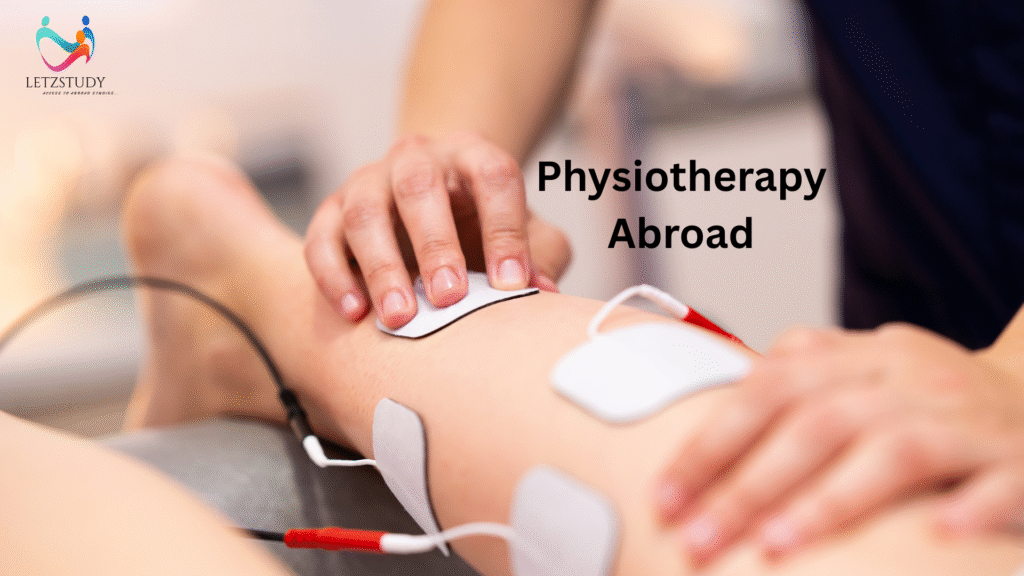
Physiotherapy is a healthcare profession focused on helping people improve movement, physical function and quality of life. For students interested in healthcare but looking for a profession that combines science, clinical practice and direct patient interaction, Physiotherapy Abroad can be an attractive study option.
Studying in another country can expose students to different healthcare systems, clinical environments and approaches to rehabilitation. However, choosing a physiotherapy programme requires more than comparing university rankings. Physiotherapy is a regulated profession in many countries, so students should consider accreditation, clinical education and the professional registration pathway before applying.
This guide explores physiotherapy courses abroad, popular study destinations, eligibility, costs, professional registration, career options and the factors students should consider when planning their 2026/27 intake.
What Does Studying Physiotherapy Abroad Involve?
Physiotherapy education generally combines academic study with practical and clinical learning. Depending on the country and qualification, students may study areas such as anatomy, physiology, biomechanics, movement science, rehabilitation and clinical assessment.
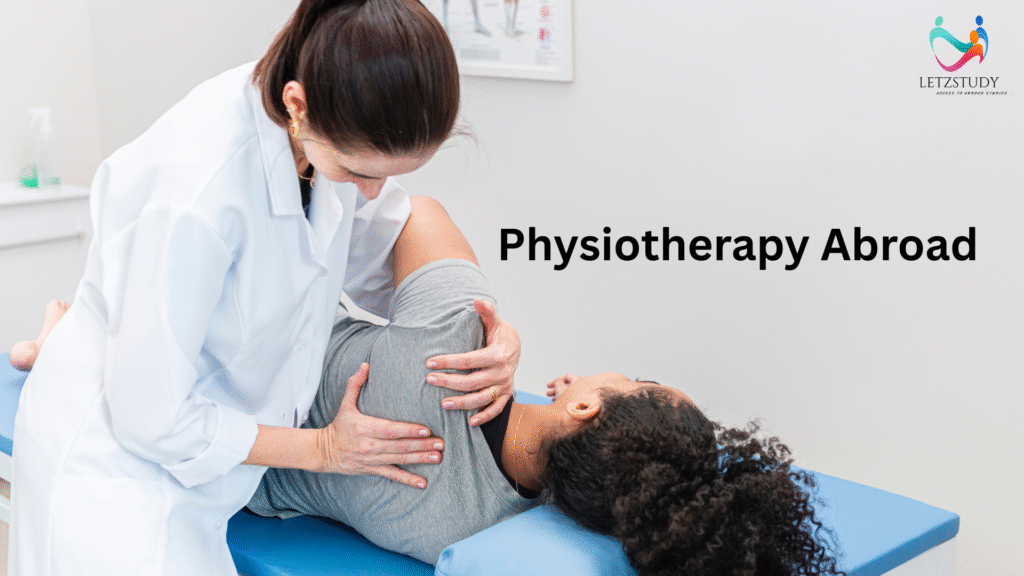
Clinical education is particularly important because physiotherapy is a hands-on profession. Students may gain experience working with patients across areas such as:
- Musculoskeletal rehabilitation
- Neurological rehabilitation
- Cardiorespiratory care
- Sports and exercise rehabilitation
- Orthopaedic rehabilitation
- Geriatric care
- Paediatric rehabilitation
- Community and rehabilitation services
The exact curriculum and clinical placement structure varies between universities and countries.
Students should therefore look beyond the course title and examine the programme curriculum, placement opportunities, professional accreditation and eligibility for registration after graduation.
Why Consider Physiotherapy Abroad in 2026/27?
International exposure to healthcare systems
Studying overseas can give students experience of healthcare delivery in a different country. This can broaden their understanding of patient care, rehabilitation and multidisciplinary healthcare practice.
Practical and clinical learning
A strong physiotherapy programme should provide opportunities to develop clinical reasoning, communication and practical skills alongside academic knowledge.
Different programme formats
International universities offer a range of physiotherapy qualifications. Depending on previous education and career goals, students may find undergraduate degrees, postgraduate pre-registration programmes, integrated master’s programmes or Doctor of Physiotherapy options.
Professional development
Studying in a regulated healthcare environment can help students understand professional standards, clinical responsibilities and the importance of evidence-informed practice.
However, studying abroad should not automatically be viewed as a guarantee of employment or international mobility. Professional registration requirements can differ significantly between jurisdictions.
What Can You Study in Physiotherapy Abroad?
Bachelor’s Physiotherapy Programmes
Bachelor’s-level programmes are generally designed for students beginning their professional physiotherapy education after secondary school or equivalent qualifications.
Common programme titles include:
- BSc Physiotherapy
- Bachelor of Physiotherapy
- Bachelor of Physiotherapy (Honours)
- Bachelor of Applied Science (Physiotherapy)
The structure, duration and professional recognition of these programmes vary by country.
Students should confirm that the specific programme is recognised by the relevant professional regulator before accepting an offer.
Master’s and Pre-Registration Programmes
Students who already hold an appropriate bachelor’s degree may find postgraduate physiotherapy programmes designed for entry into the profession.
The UK, for example, has approved MSc Physiotherapy and pre-registration programmes alongside undergraduate options. The Health and Care Professions Council (HCPC) maintains an approved-programmes database for physiotherapy education.
This route can be relevant to graduates who want to move into physiotherapy from a related academic background, although individual university entry requirements differ.
Doctor of Physiotherapy Programmes
Some countries, particularly the United States and Australia, offer Doctor of Physiotherapy programmes.
A Doctor of Physiotherapy is not simply another name for a master’s degree. Programme structure, entry requirements, professional recognition and licensing requirements depend on the country.
Students should always check the exact professional pathway attached to the qualification.
Best Countries to Study Physiotherapy Abroad
There is no single best destination for every student. The right choice depends on academic background, budget, preferred healthcare system, professional goals and where the student eventually wants to practise.
United Kingdom
The UK is a well-established destination for physiotherapy education, with undergraduate and postgraduate routes available.
The HCPC lists approved physiotherapy programmes across UK universities, while the Chartered Society of Physiotherapy states that UK pre-registration programmes are accredited through its education framework.
Students can find options such as:
- BSc (Hons) Physiotherapy
- MSc Physiotherapy (Pre-registration)
- Integrated master’s programmes
- Postgraduate physiotherapy programmes
For students intending to practise in the UK, professional registration is an important consideration because physiotherapy is regulated by the HCPC.
The UK can also be worth considering for students who want a clearly defined professional education pathway and access to a broad range of universities.
Australia
Australia offers a wide range of accredited physiotherapy programmes.
The Australian Physiotherapy Council currently lists more than 50 accredited physiotherapy programmes, including bachelor’s, master’s and Doctor of Physiotherapy options across Australian universities.
Examples of programme types include:
- Bachelor of Physiotherapy
- Bachelor of Physiotherapy (Honours)
- Master of Physiotherapy
- Doctor of Physiotherapy
- Combined undergraduate and postgraduate pathways
Australia’s physiotherapy education system places strong emphasis on accredited programmes. The Australian Health Practitioner Regulation Agency explains that graduates of approved programmes are qualified to apply for registration, subject to meeting the other applicable registration requirements.
This makes programme accreditation particularly important for international students.
Canada
Canada is another destination worth considering, particularly for students interested in a North American healthcare environment.
However, students should understand that professional licensing is handled at the provincial or territorial level. The Canadian Alliance of Physiotherapy Regulators (CAPR) supports the assessment process for internationally educated physiotherapists, while provincial regulators issue licences to practise.
For students studying in Canada, the programme’s professional accreditation and the requirements of the province where they intend to practise should be checked before enrolment.
Canada is also updating its credentialling system for internationally educated physiotherapists. CAPR has announced a Comparability Pathway launching in October 2026, replacing the previous Standard Pathway.
This illustrates why students planning a long-term career should check current regulatory information rather than relying on older advice.
New Zealand
New Zealand has a smaller but clearly defined group of accredited physiotherapy education providers.
As of 2026, the Physiotherapy Board of New Zealand identifies four accredited education institutes offering approved physiotherapy practitioner programmes:
- Auckland University of Technology
- University of Auckland
- Waikato Institute of Technology
- University of Otago
The Board’s current information was updated in June 2026.
Because the number of accredited providers is comparatively limited, students should research programme availability and admission requirements early.
Ireland
Ireland can be an attractive option for students interested in studying physiotherapy within the European healthcare environment.
CORU, Ireland’s health and social care regulator, maintains a list of approved physiotherapy qualifications. Current approved qualifications include physiotherapy programmes at institutions such as the University of Limerick, University College Dublin, University College Cork and other recognised providers.
Students considering Ireland should pay close attention to professional recognition. CORU states that people with international qualifications must have their qualification recognised before they can apply for registration.
United States
The United States follows a different professional education model from many other destinations.
Students interested in becoming physical therapists generally need to understand the Doctor of Physical Therapy pathway and state-specific licensing requirements.
The Commission on Accreditation in Physical Therapy Education (CAPTE) accredits physical therapy education programmes in the US. CAPTE also makes clear that it does not accredit foreign physical therapy education for individuals educated outside the US.
Therefore, students considering the US should investigate the exact academic pathway and state licensing requirements before choosing a programme.
Physiotherapy Abroad Eligibility and Admission Requirements
Eligibility varies by university, country and programme level. Students should always check the requirements of each university before applying.
For undergraduate physiotherapy courses, universities may consider:
- Completion of Class 12 or equivalent secondary education
- Strong performance in relevant science subjects
- Biology or other required science subjects
- English-language proficiency
- Academic transcripts
- Personal statement or motivation statement where required
- References where required
- Interviews or additional selection activities for some programmes
For master’s or pre-registration programmes, requirements may include:
- A relevant bachelor’s degree
- Specific prerequisite subjects
- Academic transcripts
- English-language proficiency
- Evidence of relevant experience where required
- Personal statement
- References
- Interview or other selection requirements
Requirements can vary considerably. A student should not assume that meeting the requirements of one university means they will meet those of another.
How Much Does It Cost to Study Physiotherapy Abroad?
The cost of studying physiotherapy abroad depends on the country, university, programme level and city.
Students should budget for several categories:
| Cost category | What to consider |
|---|---|
| Tuition fees | Vary by university, course and student status |
| Accommodation | Depends heavily on city and housing type |
| Living expenses | Food, transport, utilities and personal expenses |
| Health insurance | Requirements vary by destination |
| Visa-related expenses | Depend on the destination and current immigration rules |
| Travel | Flights and local transportation |
| Study materials | Books, equipment and other course-related expenses |
| Clinical requirements | Uniforms, equipment or placement-related expenses may apply |
Instead of relying on a single generic cost figure, students should calculate the total estimated budget for their chosen university and city.
Tuition and living costs can change between academic years, so students planning for 2026/27 should check the university’s latest fee information and the relevant government guidance before making financial decisions.
Professional Registration: What Students Must Understand
This is one of the most important aspects of studying physiotherapy abroad.
A university offer and a professional licence are not the same thing.
A student may successfully complete a physiotherapy qualification but still need to meet additional registration or licensing requirements before practising professionally in a particular country.
For example:
- In the UK, international applicants who trained outside the UK may need to apply through the HCPC international registration route.
- In Australia, physiotherapy programmes are subject to accreditation and graduates must still meet applicable registration requirements.
- In Canada, internationally educated physiotherapists may need credential assessment and examination requirements before provincial licensing.
- In Ireland, international qualifications must be recognised by CORU before registration can be obtained.
The same principle applies if a student studies in one country but later wants to practise in another.
For example, CORU specifically advises students studying physiotherapy abroad to research whether their programme covers the core areas needed for registration in Ireland, including musculoskeletal, cardiorespiratory and neurological physiotherapy.
Always check the professional regulator before selecting a programme if your long-term goal is clinical practice.
Career Opportunities After Studying Physiotherapy Abroad
Physiotherapy graduates can work across different healthcare and rehabilitation settings, subject to local registration and employment requirements.
Potential areas include:
- Hospitals
- Rehabilitation centres
- Private clinics
- Sports and exercise settings
- Community healthcare
- Elderly care
- Paediatric services
- Neurological rehabilitation
- Musculoskeletal practice
- Cardiorespiratory rehabilitation
- Research and education
With further education and experience, some physiotherapists may also move toward specialised clinical areas, research, teaching, management or related health and rehabilitation roles.
However, career opportunities depend on professional registration, local labour-market conditions, immigration status, employer requirements and the student’s qualifications and experience.
Studying abroad can provide international exposure, but it should not be presented as a guaranteed route to employment, permanent residence or professional registration.
How to Choose the Right Physiotherapy Programme
A good physiotherapy course should be evaluated on more than university reputation.
Before applying, consider these factors:
1. Check professional recognition
Confirm that the programme is recognised or approved by the relevant professional body in the country.
For example, the HCPC provides an approved-programmes database for UK physiotherapy education, while Australia’s approved-programme framework and accreditation system should be checked for Australian courses.
2. Examine clinical placements
Look at where students complete placements, how much clinical education is included and whether the placement structure fits your career interests.
3. Check entry requirements carefully
Compare academic prerequisites, English-language requirements, interviews and other selection criteria.
4. Consider your intended country of practice
If you plan to return to India or move to another country after graduation, investigate whether the qualification can support the relevant professional recognition process.
5. Compare the total budget
Do not look only at tuition. Include accommodation, living expenses, insurance, travel, visa-related costs and other study expenses.
6. Research the curriculum
Look for sufficient coverage of areas relevant to your intended career, such as musculoskeletal, neurological and cardiorespiratory physiotherapy.
7. Understand the post-study pathway
If working abroad is part of your plan, research professional registration, immigration requirements and employer expectations separately.
Common Mistakes Students Should Avoid
Students considering physiotherapy abroad should avoid:
- Choosing a university only because of its global ranking
- Assuming every physiotherapy degree is professionally recognised
- Confusing university accreditation with professional registration
- Ignoring clinical placement opportunities
- Choosing a programme without checking its curriculum
- Assuming a qualification will automatically transfer to another country
- Using outdated information about licensing or registration
- Budgeting only for tuition fees
- Assuming study abroad automatically leads to a job or permanent residence
- Applying without checking the latest university requirements
The most important lesson is simple: choose the professional pathway first and the university second.
Frequently Asked Questions
Is Physiotherapy Abroad a good career option?
It can be a strong option for students who enjoy healthcare, human movement, rehabilitation and direct patient interaction. The suitability depends on the student’s academic interests and long-term professional goals.
Which country is best for physiotherapy abroad?
There is no universally best country. The UK, Australia, Canada, New Zealand, Ireland and the US each have different education and professional-registration systems. Students should compare the course structure, accreditation, cost, admission requirements and intended country of practice.
Can Indian students study physiotherapy abroad?
Yes. Indian students can apply to eligible physiotherapy programmes abroad if they meet the academic, English-language and other admission requirements of the university and destination country.
Can I work abroad after completing a physiotherapy degree?
Possibly, but completing the degree does not automatically grant the right to practise. Physiotherapy is regulated in many destinations, and graduates may need professional registration, licensing or additional assessment before practising.
Is IELTS required for physiotherapy abroad?
English-language requirements depend on the university and destination. Some institutions may accept IELTS, while others may accept alternative English-language tests or qualifications. Students should check the current requirements of each university.
Can I study physiotherapy abroad and return to work in another country?
Potentially, but professional recognition is not automatically transferable between countries. For example, Ireland requires recognition of international qualifications before registration, while Canada has its own credentialling and licensing framework.
Should I choose a bachelor’s or master’s in physiotherapy abroad?
This depends on your current qualification. Students coming directly after secondary school may consider undergraduate programmes, while graduates from an appropriate academic background may find pre-registration master’s options. University-specific eligibility should always be checked.
Key Takeaways
Physiotherapy Abroad can be a smart career choice for students who want to combine healthcare knowledge, practical clinical education and rehabilitation-focused patient care. Destinations such as the UK, Australia, Canada, New Zealand, Ireland and the US offer different pathways, but their education and professional-registration systems are not interchangeable.
Before applying, compare the programme’s accreditation, curriculum, clinical placements, eligibility requirements, overall cost and professional-registration pathway. Most importantly, think about where you want to practise after graduation and make sure your chosen qualification supports that goal.
For the 2026/27 intake, students should use current university and regulator information rather than relying on older admission or licensing advice.
Start Your Study Abroad Journey
If you are planning to study abroad and need help understanding your options, you can connect with a LetzStudy counsellor for personalised guidance. We can help you explore suitable countries, universities, courses, eligibility requirements, application steps and other aspects of your study-abroad journey based on your academic profile and goals.