

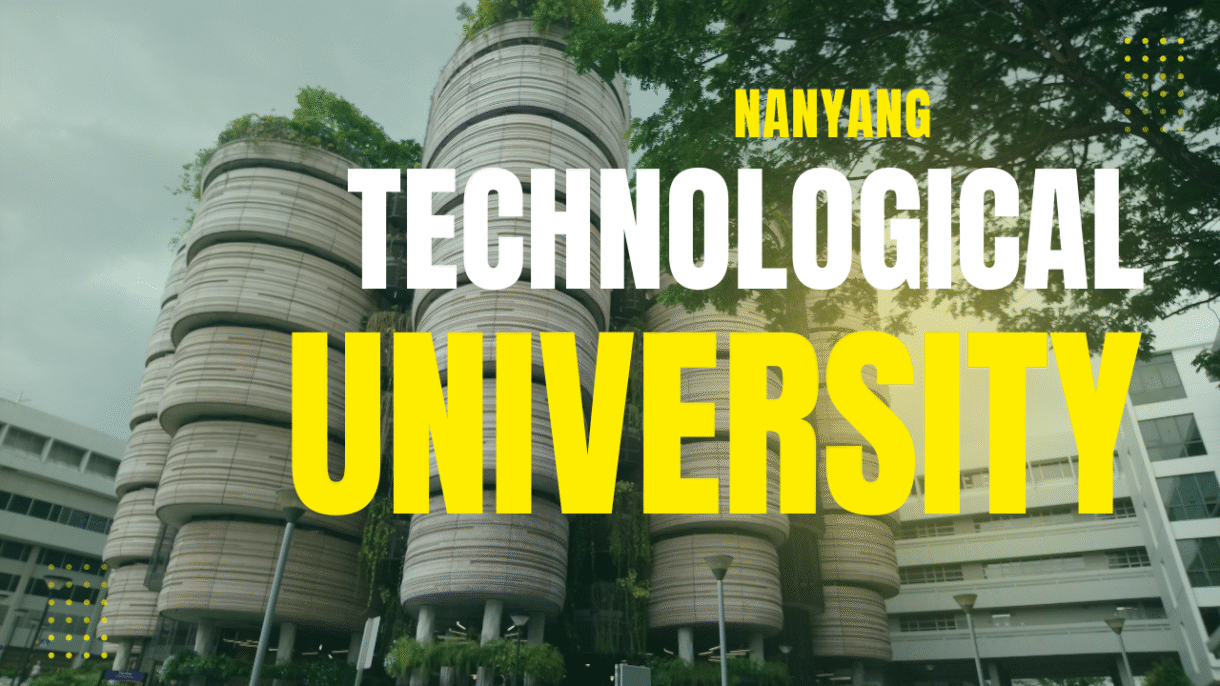
Nanyang Technological University NTU is one of Singapore’s major public research universities and a popular option for students interested in engineering, computing, artificial intelligence, science, business and interdisciplinary programmes. For international students considering Singapore in 2026, NTU offers a broad range of undergraduate, master’s and research degrees alongside scholarships and government-subsidised tuition options.
Admission, however, is highly competitive. Indian students applying with Standard 12 qualifications are expected to demonstrate particularly strong academic performance, while programme-specific subject requirements may also apply. NTU officially states that meeting its minimum eligibility requirements does not guarantee admission.
This guide explains NTU rankings, courses, eligibility, 2026 tuition fees, scholarships, application timelines, living expenses and important points international students should consider before applying.
What Is Nanyang Technological University NTU?
Nanyang Technological University, commonly known as NTU Singapore, is a research-intensive university located primarily on a large residential campus in western Singapore. Its main campus covers approximately 200 hectares, while NTU also operates a campus at one-north, close to Singapore’s biomedical research hub.
The university offers programmes across areas including engineering, computing and data science, business, science, humanities, social sciences, communication, medicine, art and design. Its academic structure also supports double degrees, second majors, minors and interdisciplinary combinations.
For students considering technology-focused education, NTU has particularly extensive offerings in computer science, artificial intelligence, data science, computer engineering, electrical engineering and related disciplines.
Why Consider NTU Singapore in 2026?
NTU may appeal to international students who want a highly ranked Asian university with strong science, technology and interdisciplinary programmes.
One of its strengths is the range of academic pathways. Students are not necessarily restricted to a traditional single-major structure. Depending on the programme, options can include second majors, double degrees and combinations connecting computing with business, economics, engineering or sustainability.
NTU has also expanded its AI-related undergraduate offerings. Its current programme catalogue includes Computer Science, Data Science and Artificial Intelligence, Computer Engineering and Artificial Intelligence and Society, among other technology-focused choices.
The university’s Singapore location can also be attractive to students interested in studying within a major Asian business, technology and research centre.
Nanyang Technological University Ranking in 2026
NTU remains among the world’s highly ranked universities.
In the QS World University Rankings 2026, Nanyang Technological University was ranked 15th globally. The subsequently released QS 2027 ranking placed NTU at 12th globally, showing an improvement from the 2026 edition.
Rankings can help students compare universities, but they should not be the only factor behind a decision. Course content, faculty research, career goals, tuition, scholarships, location and subject-specific strength can be more important for an individual applicant.

Key Takeaways
-
- NTU ranked 15th globally in the QS World University Rankings 2026, while the newer 2027 ranking places it 12th.
-
- Indian Standard 12 applicants generally need at least 90% in applicable subjects to meet NTU’s minimum requirement to apply.
-
- JEE Main is not required for NTU admission, although NTU states that a good JEE Advanced ranking is valued.
-
- International students may qualify for subsidised tuition through Singapore’s MOE Tuition Grant, subject to its conditions.
-
- Undergraduate tuition for many non-ASEAN international students receiving the Tuition Grant is approximately S$21,400 per year for the 2026 cohort.
-
- NTU estimates undergraduate living expenses at approximately S$970–S$1,725 per month, depending on accommodation and lifestyle.
-
- Scholarships such as the Nanyang Global Scholarship are open to applicants of all nationalities.
Courses at Nanyang Technological University
NTU offers programmes spanning technology, engineering, business, science, humanities and other disciplines.
Undergraduate Programmes
Examples of undergraduate programmes available in Academic Year 2026 include:
| Study Area | Examples of NTU Programmes |
|---|---|
| Computing | Computer Science, Data Science and Artificial Intelligence, Artificial Intelligence and Society |
| Engineering | Aerospace Engineering, Computer Engineering, Bioengineering, Civil Engineering, Electrical and Electronic Engineering, Environmental Engineering |
| Business | Business, Accountancy, Applied Computing in Finance |
| Science | Biological Sciences, Chemistry and Biological Chemistry, Environmental Earth Systems Science |
| Humanities and Social Sciences | Economics, English, History, Chinese |
| Media and Design | Communication Studies, Art, Design and Media |
| Interdisciplinary | Economics and Data Science, Business and Computing, Computer Science and Economics |
NTU also offers double-degree and second-major combinations. For example, students can combine computing with business, economics, entrepreneurship or sustainability depending on the programme and eligibility requirements.
The Bachelor of Computing in Computer Science, for example, is structured as a four-year direct honours programme and includes computing foundations, software development, algorithms, data systems, projects and industry exposure.
Students should compare programme curricula rather than selecting a university solely because of overall rankings.
Postgraduate Coursework and Research Programmes
NTU also offers postgraduate coursework degrees, research master’s programmes and PhDs.
For coursework programmes, students normally complete structured modules and may undertake a project or dissertation, although programme formats vary. Most coursework programmes have an August intake, while selected programmes also offer January or trimester-based intakes.
Research students conduct supervised research on an approved topic and submit a thesis. NTU’s research admission guidance expects applicants to demonstrate strong academic potential and appropriate academic preparation.
NTU Admission Requirements for International Students
Admission requirements depend on the applicant’s qualification, chosen course and level of study.
NTU has one main undergraduate intake each academic year, with teaching typically beginning around late July or early August. International applicants must apply according to the category corresponding to their school qualification.
Subject prerequisites can also apply. Computing and engineering programmes, for example, commonly expect a strong Mathematics, Physics or Computing background.
NTU Requirements for Indian Class 12 Students
For applicants using India Standard 12, NTU currently states a minimum requirement of at least 90% in all applicable subjects, including English, while excluding other languages and specified technical subjects such as Home Science, Art and Fashion Design.
This is only the minimum level required to apply.
NTU explicitly notes that admission is highly competitive for non-citizens because places are limited. Admission standards vary between programmes and from year to year, while double degrees and other specialised pathways can be more competitive.
For Indian applicants:
-
- JEE Main is not required and NTU states that it does not improve admission chances.
-
- A good JEE Advanced ranking is valued.
-
- Students who are still completing Standard 12 may apply within the relevant application period.
- Applicants must submit their final Standard 12 results according to NTU’s instructions once results are available.
Students should therefore avoid interpreting the 90% requirement as an expected admission cut-off or guarantee.
English Language Requirements
English testing requirements depend on the applicant’s educational background.
For Indian Standard 12 applicants, NTU states that an English proficiency test is required where English was not the medium of instruction or was studied as a second/additional language.
Accepted options can include IELTS, TOEFL, SAT, PTE Academic, ACT with Writing and Cambridge C1 Advanced, subject to NTU’s current rules.
For example, the published IELTS requirement for relevant applicants is a minimum overall score of 6, including 6 in writing and speaking/verbal requirements specified by NTU.
Testing policies can change, particularly following changes to examination scoring systems, so applicants should verify the requirement applicable to the exact test date and qualification before booking an exam.
Master’s and Research Programme Requirements
For most NTU postgraduate coursework programmes, applicants need at least a good bachelor’s degree. Individual schools may impose additional academic, work-experience, portfolio, GRE, GMAT or English-language requirements.
Where English testing is required, minimum scores can vary by school. For example, NTU’s current coursework guidance lists an IELTS requirement of 6.5 for programmes under Nanyang Business School and the College of Computing and Data Science, alongside corresponding TOEFL requirements.
For postgraduate research admission, NTU generally expects a strong bachelor’s degree with at least an honours distinction or equivalent, together with appropriate English proficiency when the applicant’s previous degree was not conducted in English.
Applicants should always check the specific department rather than relying solely on university-wide minimum requirements.
NTU Application Dates and Deadlines
Application dates vary according to qualification and programme.
For the AY2026-27 undergraduate intake, India Standard 12 applications were accepted from 15 October 2025 until 19 March 2026.
Students planning ahead should note that NTU has announced that international undergraduate applications for AY2027-28 begin from 15 October 2026, although closing dates vary by qualification. Some application groups continue until March 2027.
For postgraduate coursework programmes, application periods depend considerably on the school. Many August-intake programmes open around November, while selected January-intake programmes accept applications around July and August.
Because these dates can change, students should treat older admission calendars only as planning references.
How to Apply to Nanyang Technological University
A typical international application process involves:
-
- Choose the programme carefully. Review curriculum, academic prerequisites, programme length and career relevance.
-
- Identify your qualification category. International undergraduate applicants must apply through the route corresponding to their school qualification.
-
- Check academic and English requirements. Requirements can differ significantly between courses.
-
- Prepare academic records. These may include school or university transcripts, examination results and predicted or provisional results where accepted.
-
- Prepare supporting documents. Depending on the programme, applicants may need identification documents, English-language scores, portfolios, additional assessments or other materials.
-
- Submit the online application before the relevant deadline.
-
- Upload outstanding results when requested. Indian Standard 12 students awaiting board results must follow NTU’s procedure for submitting final results after release.
-
- Monitor the application portal and email. Shortlisted students may be asked for interviews, tests or additional information.
-
- Accept the offer and complete enrolment formalities if admitted.
- Complete Student’s Pass requirements. NTU assists admitted full-time international students with the Singapore Student’s Pass application process.
Admission and immigration approval are separate processes. An NTU offer does not by itself guarantee approval of immigration permission.
Nanyang Technological University Fees for International Students
Students should budget separately for tuition, housing, meals, transportation, books and personal expenses.
Undergraduate Tuition Fees
For students accepting an undergraduate programme in 2026, NTU publishes different tuition rates according to nationality, programme and whether the student receives the Singapore MOE Tuition Grant.
For a non-ASEAN international student such as an Indian applicant, approximate annual fees for the 2026 cohort are:
| Programme Category | With Tuition Grant | Without Tuition Grant |
|---|---|---|
| Most programmes | Approximately S$21,400 per year | Approximately S$36,350–S$40,600 per year |
| Business, Accountancy and selected related programmes | Approximately S$21,800 per year | Approximately S$45,600 per year |
| Medicine | Approximately S$91,250 per year | Not applicable under the published table |
| Renaissance Engineering Programme | Approximately S$32,000 per year | Not applicable under the published table |
The non-subsidised rate for most programmes varies according to whether the course is classified as lab-based or non-lab-based. NTU states that the annual fee applicable to a student accepting an offer in 2026 is fixed at the 2026 cohort rate for the normal duration of that degree.
These figures should still be treated as approximate planning amounts because individual circumstances, programme classification and university policies can affect what a student ultimately pays.
Cost of Living at NTU Singapore
NTU’s current undergraduate guidance estimates monthly living expenses as follows:
| Expense | Approximate Monthly Cost |
|---|---|
| On-campus accommodation | Approximately S$350–S$735 |
| Meals | Approximately S$300–S$450 |
| Transport, books and personal expenses | Approximately S$320–S$540 |
| Estimated total | Approximately S$970–S$1,725 |
Actual spending depends heavily on room type, lifestyle, eating habits, transport and personal expenses.
Students should therefore build a financial buffer rather than planning around the lowest published estimate.

Scholarships at NTU for International Students
NTU offers several merit-based scholarships, with some awards open to students of all nationalities.
One important option is the Nanyang Global Scholarship, which is available to outstanding freshmen from any nationality. Applicants are assessed on academic performance, leadership potential and co-curricular achievements.
Current benefits include:
-
- Full coverage of subsidised tuition fees after the Tuition Grant
-
- Approximately S$6,500 per academic year as a living allowance
-
- Up to approximately S$2,000 per academic year as an accommodation allowance for eligible hostel residents
-
- Up to approximately S$8,000 for an eligible overseas programme
-
- Approximately S$2,000 as a one-time computer allowance
- Approximately S$2,000 as a one-time computer allowance
Scholarship holders must meet continuing academic and conduct requirements. The Nanyang Global Scholarship currently requires a minimum CGPA of 3.5 out of 5.0.
NTU also offers the Nanyang Merit Scholarship, which provides subsidised tuition coverage together with approximately S$5,000 per academic year for living expenses and an approximately S$4,000 one-time travel grant under the published benefits.
Scholarships are competitive. Students should not assume that strong marks alone will secure an award because leadership and co-curricular performance may also be considered.
MOE Tuition Grant and the Three-Year Bond
The Singapore Ministry of Education Tuition Grant can substantially reduce tuition costs for eligible international students.
However, international students who accept subsidised tuition under the MOE Tuition Grant Scheme are generally subject to a three-year service obligation after graduation. NTU scholarship information confirms that this requirement also applies to international scholarship recipients who receive subsidised tuition through the Tuition Grant.
This distinction is important.
A scholarship may itself have no additional bond, but an international student can still have obligations arising from accepting the MOE Tuition Grant.
Students should therefore read the latest Tuition Grant conditions carefully before choosing between subsidised and non-subsidised tuition.
Student Life and Accommodation at NTU
NTU’s main campus is designed as a residential university environment with academic buildings, halls, dining facilities, sports facilities, green spaces and specialised learning hubs.
One of its most recognisable buildings is the learning hub historically known as The Hive, which was designed around collaborative learning spaces rather than conventional classroom layouts. The building was renamed the UOB Innovation Hub in 2026.
NTU also provides on-campus accommodation for students. Living on campus can reduce travel time while giving international students more opportunities to participate in university societies, sports, academic activities and campus events.
The university’s published living-cost estimates indicate that on-campus accommodation can cost approximately S$350–S$735 per month depending on room arrangements.
Housing availability, eligibility and room allocation policies can change, so students should check accommodation rules after receiving an admission offer.
Is Nanyang Technological University Right for You?
NTU can be a strong option if your academic interests align with its programmes and you are comfortable with a selective admission environment.
It may be particularly worth considering if you want to study:
-
- computer science or artificial intelligence;
-
- data science;
-
- computer, electrical or aerospace engineering;
-
- science and biotechnology;
-
- business or accountancy;
-
- interdisciplinary combinations such as computing with business or economics.
- interdisciplinary combinations such as computing with business or economics.
At the same time, students should compare the complete financial commitment, not just ranking prestige.
An international applicant choosing between NTU and universities in the UK, Australia, Canada, Europe or the United States should compare tuition, scholarships, programme structure, work opportunities, immigration rules and long-term career plans before deciding.
Frequently Asked Questions
Is Nanyang Technological University good for international students?
NTU is a highly ranked Singapore university offering a broad range of programmes and scholarships open to international applicants. Its suitability depends on your academic profile, subject choice, budget and career plans.
What is Nanyang Technological University ranked in 2026?
NTU was ranked 15th globally in the QS World University Rankings 2026. The newer QS 2027 ranking, released during 2026, places NTU at 12th globally.
How much percentage is required for NTU from India?
For India Standard 12 applicants, NTU currently states that applicants need at least 90% in applicable subjects, including English, to meet the minimum requirement to apply. This does not guarantee admission.
Is JEE required for admission to NTU Singapore?
No. NTU states that JEE Main is not required and does not improve an applicant’s admission chances. However, a good JEE Advanced ranking is valued.
What is the acceptance rate of NTU Singapore?
NTU’s public undergraduate admission guidance does not provide one universal acceptance-rate figure covering every nationality, qualification and programme. Students should therefore be cautious about unofficial percentages published elsewhere. NTU states that admission is highly competitive, particularly for non-citizens because the number of available places is limited.
How much does NTU cost for Indian students?
For many undergraduate programmes, a non-ASEAN international student receiving the MOE Tuition Grant may pay approximately S$21,400 per year for the 2026 cohort. Without the grant, many programmes cost approximately S$36,350–S$40,600 per year. Fees differ for certain courses.
NTU additionally estimates living expenses at approximately S$970–S$1,725 per month.
Can international students get scholarships at NTU?
Yes. Scholarships including the Nanyang Global Scholarship are open to all nationalities, although selection is competitive and considers academic achievement, leadership and co-curricular performance.
Key Takeaways
Nanyang Technological University NTU is a strong option for academically competitive students seeking education in Singapore, particularly in computing, AI, engineering, science, business and interdisciplinary fields.
For Indian students, the key points are clear: NTU expects excellent Class 12 performance, admission is competitive, JEE Main is not required, and programme-specific prerequisites matter. Tuition can also differ substantially depending on whether the student accepts the MOE Tuition Grant.
Before applying, shortlist the right course, check the latest qualification-specific requirements, calculate tuition and living expenses, explore scholarships and understand any Tuition Grant obligations.
This article is for educational and informational purposes. University admission requirements, tuition fees, visa rules, scholarships, immigration policies and post-study opportunities may change. Students should verify the latest information with the relevant university, government authority, immigration department, embassy or official source before making a decision.
Start Your Study Abroad Journey
If you are planning to study abroad and need help understanding your options, you can connect with a LetzStudy counsellor for personalised guidance. We can help you explore suitable countries, universities, courses, eligibility requirements, application steps and other aspects of your study-abroad journey based on your academic profile and goals.
Book a Free Consultation
