

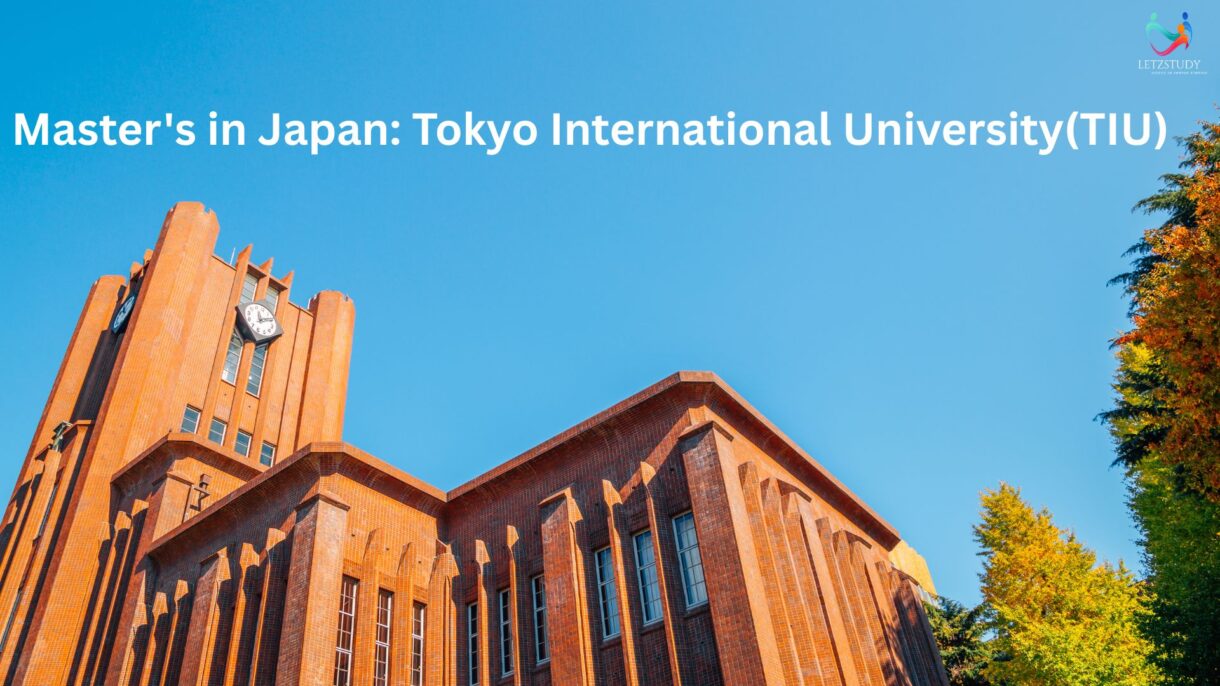
Japan is an increasingly interesting destination for international students who want to combine postgraduate education with exposure to one of the world’s major technology, business and cultural centres. For students considering a Master’s in Japan at Tokyo International University, TIU can be worth exploring because of its international outlook and location in the Tokyo metropolitan area.
Tokyo International University offers programmes designed for students from different academic and cultural backgrounds, making it relevant for international applicants considering postgraduate study in Japan.
For the 2026–27 intake, students should look carefully at the specific graduate programme they intend to apply for because eligibility requirements, language requirements, application periods, documents and fees can differ by programme and intake.
This guide explains the key factors to consider before applying to Tokyo International University for a master’s degree.
Why Consider a Master’s in Japan at Tokyo International University?
Choosing a university for postgraduate study involves more than looking at rankings or location. Students should consider the programme curriculum, language of instruction, academic environment, career opportunities and overall cost.
TIU may appeal to international students for several reasons:
- International learning environment: Students can study alongside people from different countries and backgrounds.
- Tokyo location: The university provides access to one of the world’s largest metropolitan areas and an important centre for business, technology and innovation.
- Japan’s business environment: Students interested in Japanese companies, international business, technology or Asian markets can benefit from studying in Japan.
- International perspective: TIU has a strong focus on international education and interaction.
- Career exposure: Tokyo provides opportunities to learn about Japanese and international organisations, although employment depends on the student’s qualifications, Japanese-language ability, experience and applicable immigration requirements.
For Indian students, studying in Tokyo can also provide exposure to a different academic and professional environment while developing international experience.
What Can International Students Study at TIU?
The most important step is to identify the graduate programme that matches your academic background and career plans.
Tokyo International University has graduate-level study options, but applicants should review the university’s official graduate admissions information for the 2026–27 academic year before selecting a programme.
Graduate Study Areas
Depending on the current programme structure and intake, students may find graduate-level opportunities connected with areas such as:
- Business and management
- International relations
- Economics and related social sciences
- International business
- Contemporary global issues
- Other specialised graduate fields offered by the university
The exact availability of programmes, specialisations, teaching language and intake should be confirmed with TIU before submitting an application.
Students should also check whether their intended programme requires a particular undergraduate major or specific academic preparation.
English-Medium Study Opportunities
Language of instruction is an important consideration for international students.
Students who want to study primarily in English should check the language of instruction for their chosen graduate programme rather than assuming that all master’s programmes at TIU are delivered entirely in English.
Where English proficiency is required, the university may specify accepted tests and minimum requirements. These can vary depending on the programme and applicant category.
Students who plan to work in Japan after graduation should also consider learning Japanese even if their academic programme is taught in English.
Tokyo International University Admission Requirements
Admission requirements depend on the graduate programme and applicant’s academic background.
International applicants should carefully review the requirements published by TIU for the relevant 2026–27 application period.
Academic Qualifications
A typical master’s applicant will need an appropriate bachelor’s degree or equivalent undergraduate qualification.
Depending on the programme, applicants may also need to demonstrate that their previous academic background is relevant to the intended field of graduate study.
Before applying, check:
- Your bachelor’s degree eligibility
- Required academic background
- Minimum academic performance, if applicable
- Programme-specific prerequisites
- Research or study interests
- Any entrance examination or interview requirements
Meeting the minimum eligibility criteria does not automatically mean that admission will be granted. Final decisions depend on the university’s admissions process.
English-Language Requirements
International applicants may need to demonstrate English proficiency when applying to an English-medium programme.
Accepted tests and minimum scores can vary. Depending on the programme and applicant circumstances, the university may specify requirements involving recognised English-language examinations.
Students should therefore verify the latest requirements directly with TIU instead of relying on general IELTS or TOEFL requirements found on third-party websites.
Application Documents
Depending on the programme, applicants may be asked to provide documents such as:
- Passport or identification document
- Bachelor’s degree certificate
- Academic transcripts
- English-language test results, where required
- Statement of purpose or study plan
- Recommendation letters, where required
- Curriculum vitae or resume, where applicable
- Photograph and application forms
- Other programme-specific documents
Documents issued in languages other than those accepted by the university may require an appropriate translation.
Always follow the document format and submission instructions specified by TIU for the relevant application cycle.
How to Apply for a Master’s at TIU
The application process can vary by programme and intake, but international applicants should generally expect several stages.
1. Select the Graduate Programme
Start by identifying the programme that matches your academic background and career goals.
Review the curriculum, teaching language, faculty information, eligibility requirements and application schedule.
2. Check the 2026–27 Admission Requirements
Review the latest admission guidelines published by TIU.
Pay particular attention to:
- Application period
- Eligibility requirements
- Language requirements
- Required documents
- Application method
- Examination or interview requirements
- Tuition and other university charges
3. Prepare Your Documents
Collect academic records, identification documents, language test results and other required materials well before the deadline.
If documents require translation or certification, allow additional time.
4. Submit the Application
Complete the application according to TIU’s official instructions.
Check every field and document before submission because missing or incorrect information can create delays or affect the application process.
5. Complete Any Required Selection Process
Depending on the programme, applicants may need to participate in an interview, examination or other evaluation.
6. Prepare for Enrolment and Immigration Procedures
Students who receive an offer should follow TIU’s instructions for enrolment and the relevant procedures for obtaining permission to study in Japan.
Admission to a university and approval under Japan’s immigration process are separate matters.
Tuition Fees and Cost of Studying in Tokyo
The overall cost of completing a master’s in Japan depends on the university, programme, accommodation, lifestyle and duration of study.
For TIU specifically, students should refer to the latest official fee schedule for their chosen graduate programme rather than relying on older fee information.
Your budget should account for:
| Expense Category | What to Consider |
|---|---|
| Tuition | Programme tuition and applicable university charges |
| Admission-related costs | Application or admission-related charges where applicable |
| Accommodation | University housing or private accommodation |
| Food | Daily meals and groceries |
| Transportation | Local commuting and travel |
| Health and insurance | Applicable student and health-related expenses |
| Study materials | Books, software and other academic requirements |
| Personal expenses | Mobile services, clothing, entertainment and other needs |
Tokyo can be more expensive than many other parts of Japan, particularly for accommodation and everyday living.
Students should prepare a realistic monthly budget based on their preferred lifestyle and accommodation arrangement.
All monetary figures should be treated as approximate because costs can change with exchange rates, accommodation choices and individual spending patterns.
Scholarships and Financial Support
Scholarships can help reduce the financial burden of studying in Japan, but availability and eligibility vary.
Students considering TIU should investigate:
- University-specific scholarships
- Government-supported opportunities
- Japan-based scholarship programmes
- Scholarships available to international students
- External funding opportunities from organisations in their home country
Do not assume that every scholarship is automatically available to every international applicant.
Check eligibility, application deadlines, academic requirements and whether the scholarship covers tuition, living expenses or another specific cost.
Student Life at Tokyo International University
Studying at TIU means living in or around the Tokyo metropolitan area, where students have access to a large international community, extensive public transportation and a wide range of cultural and professional experiences.
International students can experience:
- Japanese culture and traditions
- Modern technology and infrastructure
- International communities
- Restaurants and entertainment
- Professional and networking events
- Museums, cultural attractions and historical locations
- Convenient transportation around the Tokyo region
At the same time, living in Tokyo requires careful financial planning.
Students should consider accommodation, commuting distance, food expenses and daily living costs before choosing where to stay.
Learning basic Japanese can also make everyday life easier, even for students enrolled in English-medium academic programmes.
Career Opportunities After a Master’s in Japan
A master’s degree from Japan can provide international academic experience and exposure to the Japanese business environment.
Tokyo is home to companies operating across sectors such as:
- Technology
- Finance
- Consulting
- Manufacturing
- Automotive
- Electronics
- E-commerce
- International business
- Research and innovation
However, a Japanese master’s degree does not automatically guarantee employment.
Students interested in building a career in Japan should consider developing:
- Relevant technical or professional skills
- Internship or project experience
- Japanese-language proficiency
- Communication skills
- Industry knowledge
- Professional networking
- An understanding of Japanese workplace culture
Employment eligibility and post-study immigration options depend on the individual’s circumstances and the immigration rules applicable at the time.
Who Should Consider TIU for a Master’s?
Tokyo International University may be worth considering if you:
- Want to pursue postgraduate study in Japan
- Prefer an internationally oriented university environment
- Are interested in studying in the Tokyo region
- Want exposure to Japanese and international business environments
- Are comfortable adapting to a new cultural environment
- Want to develop international academic and professional experience
- Are prepared to consider learning Japanese for future career opportunities
TIU may be less suitable if your preferred programme is unavailable, the teaching language does not match your requirements, or the overall cost of studying and living in Tokyo does not fit your budget.
The right university should be selected based on your academic profile, career objectives, preferred programme and financial situation.
Things to Check Before Applying to TIU for 2026–27
Before submitting an application, create a checklist covering the following:
- Confirm that your bachelor’s degree meets the programme’s eligibility requirements.
- Check whether your academic background matches the intended master’s programme.
- Verify the current English-language requirements.
- Check the 2026–27 application dates.
- Review all required documents.
- Confirm current tuition and other university charges.
- Research available scholarships.
- Estimate your Tokyo living expenses.
- Understand the applicable Japan student visa process.
- Review potential career opportunities related to your chosen field.
- Check whether Japanese-language skills would be useful for your career plans.
- Keep copies of all submitted application documents.
Starting early is particularly useful if you need to arrange language tests, obtain official academic documents, prepare financial documentation or complete immigration-related procedures.
Frequently Asked Questions
Is Tokyo International University good for a master’s in Japan?
TIU can be an option for international students considering postgraduate study in Japan. Whether it is the right choice depends on the specific graduate programme, curriculum, teaching language, career goals, budget and admission requirements.
Can Indian students apply for a master’s at Tokyo International University?
Indian students can explore TIU’s graduate admission opportunities if they meet the eligibility requirements of the relevant programme. Applicants should check the current international admission guidelines for 2026–27 before applying.
Is English proficiency required for a master’s at TIU?
English proficiency requirements depend on the programme and language of instruction. Applicants should check TIU’s current requirements to determine whether an English-language test is required and which tests are accepted.
How much does it cost to study a master’s at TIU?
The total cost depends on the programme, university fees, accommodation and personal expenses. Tuition and living costs should be treated as approximate and checked against the latest official TIU information before planning your budget.
Can international students work after completing a master’s in Japan?
International graduates may have opportunities to pursue employment in Japan if they meet the applicable employment and immigration requirements. A master’s degree itself does not guarantee a job or a particular immigration status.
Is Japanese language necessary for studying at TIU?
Japanese proficiency may not be required for every programme, particularly where the programme is designed for international students and taught in English. However, Japanese can be valuable for everyday life and can broaden employment opportunities in Japan.
This article is for educational and informational purposes. University admission requirements, tuition fees, visa rules, scholarships, immigration policies and post-study opportunities may change. Students should verify the latest information with the relevant university, government authority, immigration department, embassy or official source before making a decision.
Start Your Study Abroad Journey
A Master’s in Japan at Tokyo International University can be an option for international students seeking postgraduate education in Tokyo and an international academic environment. TIU’s location provides students with exposure to one of Asia’s major business and technology centres.
For the 2026–27 intake, applicants should focus on choosing the right graduate programme, checking the latest eligibility and language requirements, preparing documents early and creating a realistic budget for tuition and living in Tokyo.
The best choice ultimately depends on your academic background, career objectives, preferred specialisation, financial situation and willingness to adapt to life in Japan.
If you are planning to study abroad and need help understanding your options, you can connect with a LetzStudy counsellor for personalised guidance. We can help you explore suitable countries, universities, courses, eligibility requirements, application steps and other aspects of your study-abroad journey based on your academic profile and goals.
