

Finding affordable student accommodation for international students is one of the most important parts of planning to study abroad. Rent can take up a large share of a student’s monthly budget, while choosing the wrong property can lead to long commutes, unexpected bills, unsafe living conditions or even rental scams.
International students in 2026 can choose from university halls, shared apartments, private student residences, homestays, studios and temporary accommodation. The best option depends on your country, city, university location, budget and preference for privacy.
The cheapest property is not always the most economical choice. A slightly higher rent close to campus may save you significantly on transport, utilities and furnishing costs.
This guide explains the major accommodation options, current cost considerations, safety checks, rental contracts, scams and practical ways to find suitable housing before travelling abroad.
Why Accommodation Planning Matters for International Students
Housing affects much more than where you sleep.
Your accommodation influences:
-
- monthly living expenses;
-
- travel time to university;
-
- public transport costs;
-
- personal safety;
-
- access to supermarkets and healthcare;
-
- social life;
-
- study environment;
-
- privacy;
-
- independence;
-
- overall adjustment to a new country.
- overall adjustment to a new country.
Official student guidance in countries such as Germany, France, Australia, Ireland and the Netherlands repeatedly recommends beginning the accommodation search early because affordable student housing can be limited, particularly in major university cities.
Students should therefore include housing research in their study-abroad planning rather than waiting until their visa is approved or their flight is booked.
Best Accommodation Options for International Students in 2026-27
There is no single accommodation type that works for every student. Each option offers a different balance between affordability, privacy, convenience and independence.
University Halls and On-Campus Accommodation
University-managed accommodation is often one of the first options international students consider.
Depending on the institution, students may live in:
-
- single rooms;
-
- shared rooms;
-
- shared apartments;
-
- ensuite rooms;
-
- catered residences;
-
- self-catered halls.
- self-catered halls.
The main advantage is convenience. University residences are normally located on campus or near academic buildings and public transport.
They can also make the first few months abroad easier because students live around other university students.
Advantages:
-
- usually furnished;
-
- close to university;
-
- easier social interaction;
-
- university support nearby;
-
- utilities may be included;
-
- suitable for students arriving in a new country for the first time.
- suitable for students arriving in a new country for the first time.
Possible disadvantages:
-
- limited availability;
-
- application deadlines may be early;
-
- premium rooms can be expensive;
-
- students may have less privacy;
-
- some contracts cover a fixed academic period.
- some contracts cover a fixed academic period.
University accommodation should therefore be one of the first options you investigate after receiving an admission offer.
Shared Apartments and Flatshares
Sharing a house or apartment with other students is one of the most practical ways to lower accommodation costs.
Each student usually has a private bedroom while sharing areas such as:
-
- kitchen;
-
- bathroom;
-
- living room;
-
- laundry facilities.
- laundry facilities.
Rent, internet, electricity and other expenses may also be divided between housemates.
Germany’s official DAAD guidance, for example, reports that rooms in shared flats can be considerably cheaper than renting a private apartment, although prices vary greatly between cities.
Shared accommodation works well for students who want independence without paying the full cost of living alone.
Before agreeing to share, discuss cleaning, bills, guests, food and household responsibilities with your future flatmates.
Purpose-Built Student Accommodation
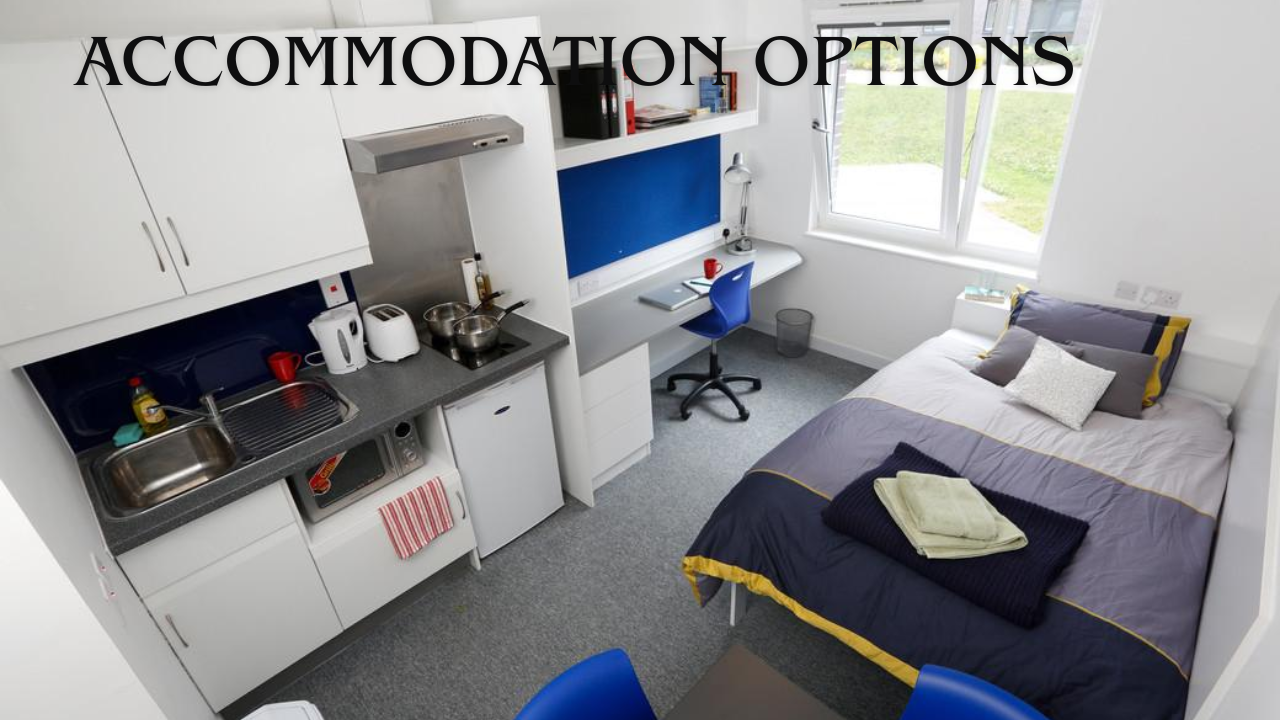
Purpose-built student accommodation, often called PBSA or private student halls, consists of residences specifically designed for students.
Common facilities may include:
-
- furnished rooms;
-
- study areas;
-
- gyms;
-
- laundry rooms;
-
- common lounges;
-
- internet;
-
- security systems;
-
- reception services.
- reception services.
These residences can be convenient because bills are often included in one rental payment. Australia’s official student guidance notes that electricity and internet are generally included in the advertised cost of managed student accommodation.
However, private student residences can be more expensive than university halls or shared houses, particularly for ensuite rooms and private studios.
Always compare the total annual cost rather than the weekly or monthly headline rent.
Homestays
A homestay means living with a local family.
Students generally receive a furnished bedroom and may also receive meals, utilities and other household services depending on the arrangement.
Homestays can be especially useful for:
-
- younger students;
-
- first-time international students;
-
- students who want family support;
-
- language learners;
-
- students unfamiliar with the destination country.
- students unfamiliar with the destination country.
Australia and Ireland both recognise homestays as accommodation options for international students.
Before booking, check what is included in the price and whether there are rules concerning meals, visitors, curfews, cooking or use of shared facilities.
Private Studios and Apartments
A private studio gives you considerably more independence.
You normally have your own:
-
- bedroom;
-
- kitchen or kitchenette;
-
- bathroom;
-
- living space.
- living space.
The main benefit is privacy. The major drawback is cost.
You may need to pay separately for electricity, heating, internet, water, insurance and furniture. A private apartment can therefore cost considerably more than its advertised rent suggests.
Students choosing private rentals should build a full monthly budget before committing.
Temporary Accommodation
Some students book short-term accommodation for their first days or weeks abroad and search for long-term housing after arrival.
Options may include:
-
- university guest rooms;
-
- hostels;
-
- serviced apartments;
-
- short-term student residences;
-
- hotels.
- hotels.
Study Australia specifically recognises short-term accommodation as an option while international students become familiar with their new city and meet potential housemates.
This strategy gives you time to inspect properties personally, but it can become expensive if you cannot find permanent housing quickly.
In cities with serious housing shortages, securing long-term accommodation before arrival is generally safer.
Which Student Accommodation Option Is Most Affordable?
The cheapest option depends on the destination, but there is a general pattern.
| Accommodation Type | Typical Affordability | Privacy | Best For |
|---|---|---|---|
| University residence | Low to moderate | Moderate | First-year students |
| Shared apartment | Low to moderate | Moderate | Budget-conscious students |
| Homestay | Moderate | Moderate | New or younger international students |
| Private student residence | Moderate to high | Moderate to high | Students wanting convenience |
| Private studio | High | High | Students prioritising privacy |
| Temporary housing | High for long stays | Varies | Short arrival periods |
For many students, university residences and shared apartments offer the best balance between affordability and convenience.
However, calculate the full cost.
For example, a cheaper apartment far from campus can become more expensive once transport costs are added.
Student Accommodation Costs in Popular Study Destinations
Housing prices change significantly between countries, cities and neighbourhoods. Even within the same city, room type and distance from campus can make a major difference.
Here are some useful 2026 reference points from official study organisations.
| Destination | 2026 Accommodation Context |
|---|---|
| Germany | Students pay about €489 per month for accommodation on average. Rooms in student-service residences average about €280 per month, while shared-flat rooms vary significantly by city. |
| France | CROUS residences remain among the cheaper choices. Campus France reports approximately €450 per month in Paris and €350 on average elsewhere for CROUS accommodation. |
| Netherlands | A student room averages about €550 per month, and official guidance continues to warn of a severe housing shortage. |
| New Zealand | Official guidance indicates accommodation may start around NZ$140 per week for a shared-house room and reach around NZ$484 per week for a catered residence. |
| Australia | Costs depend strongly on city and housing type. Private rentals commonly involve a bond and rent in advance, while managed accommodation may include utilities. |
| Ireland | University halls, private rentals and host families are available, but university accommodation can be competitive and students may need deposits and advance payments. |
These numbers should be treated as planning references rather than guaranteed rental prices.
Always check your university’s latest accommodation listings and current local rental market before preparing your final budget.
How to Find Safe Student Accommodation Abroad
Affordability should never be considered without safety.
A suitable property should ideally have:
-
- secure doors and windows;
-
- functioning locks;
-
- adequate lighting;
-
- smoke and fire-safety systems where required;
-
- reliable electricity and water;
-
- reasonable building maintenance;
-
- safe access to public transport;
-
- accessible emergency services;
-
- a legitimate landlord or accommodation provider.
- a legitimate landlord or accommodation provider.
Location matters as much as the building.
Check how you would travel between your residence and university during both the day and evening.
You should also research:
-
- nearest bus, metro or train station;
-
- walking route to campus;
-
- supermarket access;
-
- pharmacy and healthcare facilities;
-
- neighbourhood environment;
-
- university transport services.
- university transport services.
Official Australian guidance specifically recommends checking public transport access as well as nearby shopping, health, hospital and emergency services when choosing accommodation.
Do not judge safety only from photographs or promotional descriptions.
How to Avoid Student Accommodation Scams
International students are attractive targets for rental scammers because they often search remotely and may feel pressured to secure housing before travelling.
Warning signs include:
-
- rent far below the normal local market;
-
- pressure to transfer money immediately;
-
- refusal to show the room;
-
- refusal to provide a video viewing;
-
- payment requested through unusual methods;
-
- unclear landlord identity;
-
- no written agreement;
-
- copied or inconsistent photographs;
-
- requests for excessive personal information;
-
- landlord claiming to be permanently outside the country;
-
- payment demanded before basic verification.
- payment demanded before basic verification.
The Netherlands’ official international-student guidance warns students not to sign a tenancy contract without seeing the room and recommends arranging an online tour when an in-person viewing is impossible.
Before transferring money:
-
- Verify the address.
-
- Confirm who owns or manages the property.
-
- Request a live video viewing if you cannot visit.
-
- Read the complete contract.
-
- Check your university’s accommodation office.
-
- Confirm payment details.
-
- Keep receipts and written communication.
-
- Avoid cash payments without documentation.
- Avoid cash payments without documentation.
If something feels unusually cheap or unnecessarily urgent, investigate further.
What to Check Before Signing a Rental Agreement
Never sign a housing contract without reading it completely.
Check the following details:
-
- monthly or weekly rent;
-
- tenancy start date;
-
- tenancy end date;
-
- deposit amount;
-
- payment schedule;
-
- notice period;
-
- utilities included;
-
- internet charges;
-
- furniture included;
-
- maintenance responsibilities;
-
- rules regarding guests;
-
- cancellation conditions;
-
- deposit refund conditions.
- deposit refund conditions.
Some accommodation contracts may cover the full academic year, meaning you can remain responsible for rent even if you choose to leave early.
For example, current UK government guidance notes that halls or private halls can have fixed accommodation periods and students should check notice and termination conditions carefully.
Never assume you can simply move out whenever you want.
Hidden Accommodation Costs Students Often Miss
Rent is only one part of housing expenditure.
Your budget may also need to cover:
-
- security deposit;
-
- electricity;
-
- heating or gas;
-
- water;
-
- internet;
-
- laundry;
-
- renters’ insurance;
-
- furniture;
-
- bedding;
-
- kitchen equipment;
-
- transport;
-
- cleaning fees;
-
- booking charges;
-
- moving costs.
- moving costs.
Canada’s official housing guidance similarly advises newcomers to calculate costs such as utilities, insurance and other housing fees in addition to rent.
When comparing properties, calculate the total monthly cost, not simply the advertised rent.
For example:
Option A: Lower rent + expensive transport + utilities
may actually cost more than:
Option B: Higher rent + walking distance to campus + utilities included.
How Early Should International Students Book Accommodation?
Start researching accommodation as soon as your study destination and likely university become clear.
Once you receive an offer, check:
-
- university accommodation deadlines;
-
- housing guarantee conditions;
-
- deposit requirements;
-
- cancellation policies;
-
- private rental availability.
- private rental availability.
You may need to act particularly early in cities with limited student housing.
The Netherlands currently advises students to arrange accommodation before arrival because of its housing shortage, while Germany and France also recommend starting the search early.
Do not delay simply because your course begins several months later.
On-Campus vs Off-Campus Student Accommodation
| Factor | On-Campus | Off-Campus |
|---|---|---|
| Distance to classes | Usually short | Depends on location |
| Social environment | Strong student community | More independent |
| Furniture | Usually included | Varies |
| Utilities | Often included | May be separate |
| Privacy | Varies | Often greater |
| Housing choice | Limited | Wider |
| Availability | Can be competitive | Depends on rental market |
| Transport costs | Usually lower | May be higher |
First-year international students often value the support and convenience of university housing.
Students who already know the city may prefer private shared accommodation for greater independence.
Neither choice is automatically better.
How to Reduce Your Student Accommodation Costs
A few decisions can significantly reduce housing expenses.
Share an Apartment
Sharing rent and utilities with other students is one of the most effective ways to reduce monthly housing costs.
Compare Neighbourhoods
Properties directly beside campus may charge a premium.
Living slightly farther away can be worthwhile when reliable public transport is available.
Choose Shared Facilities
A room with a shared bathroom may cost less than an ensuite room.
Check What Is Included
Accommodation that includes electricity, heating, water and internet may provide better value than cheaper rent with several separate bills.
Apply Early for University Housing
Affordable university residences often receive more applications than available rooms.
Consider Smaller Student Cities
Housing in major capitals and large metropolitan areas can be significantly more expensive.
Germany’s official study guidance, for example, shows large differences between cities such as Munich and smaller locations.
Avoid Paying for Unnecessary Facilities
A residence with a gym, premium entertainment areas and other facilities may look attractive, but you are usually paying for those amenities through your rent.
Choose what you will genuinely use.
Safety Checklist Before Moving Into Student Housing
Before moving in, check:
-
- bedroom lock;
-
- entrance security;
-
- windows;
-
- fire alarms;
-
- emergency exits;
-
- electrical condition;
-
- heating or cooling;
-
- water supply;
-
- internet access;
-
- shared-area condition;
-
- neighbourhood lighting;
-
- transport availability;
-
- landlord contact details;
-
- emergency maintenance process.
- emergency maintenance process.
Take photographs of the room and any existing damage on the day you move in.
Keep copies of:
-
- rental agreement;
-
- payment receipts;
-
- deposit receipt;
-
- property inventory;
-
- landlord communication.
- landlord communication.
These records can help if there is a dispute later.
Common Accommodation Mistakes International Students Make
Choosing Only by Price
Extremely cheap rent can mean poor location, long travel times, hidden costs or unsuitable living conditions.
Waiting Too Long
Affordable university housing and good shared rooms are often taken first.
Paying Before Verification
Never send large payments simply because someone tells you another student is ready to book the room.
Ignoring the Contract
Students sometimes focus on monthly rent without checking contract length or cancellation rules.
Forgetting Utilities
A low rent does not necessarily mean low total living costs.
Not Checking Commute Time
A property may appear close to university on a map but require several transport changes.
Renting Without Understanding Housemates
Shared housing becomes difficult when residents have very different expectations about noise, cleaning, guests or expenses.
Discuss these things before moving in.
How to Choose the Right Accommodation for Your Study-Abroad Journey
Use four questions when comparing housing.
First: Can I genuinely afford it?
Calculate rent, utilities, transport and other charges.
Second: Is it safe?
Check the building, neighbourhood, transportation and provider.
Third: Is it practical?
Consider distance from university, supermarkets, healthcare and public transport.
Fourth: Does it suit my lifestyle?
Think about privacy, cooking, roommates, noise and study environment.
Students preparing for overseas education can also explore to understand other planning requirements before travelling.
Frequently Asked Questions
What is the cheapest accommodation option for international students?
University residences and shared apartments are often among the more affordable choices. However, costs depend heavily on the country, city and university.
Is university accommodation safer for international students?
University-managed accommodation can provide structured security and student support, which may make it attractive for first-year international students. However, private accommodation can also be safe when the property, neighbourhood and provider are properly verified.
Should I book student accommodation before getting my visa?
This depends on the destination, university and cancellation conditions. Students should understand the financial risk before making non-refundable payments while a visa decision is still pending.
How can I find student accommodation without getting scammed?
Start with your university accommodation office or recognised housing services. Verify the property and landlord, request a live viewing, read the contract and avoid transferring money when basic information cannot be confirmed.
Is living off campus cheaper than university accommodation?
Sometimes. Shared private accommodation may offer lower rent, but students must also consider transport, utilities, furniture and deposits before deciding which option is actually cheaper.
Are bills normally included in student accommodation?
University and purpose-built student accommodation often include some utilities, but private rentals may charge separately. Always check exactly what is included before signing.
How early should I start searching for accommodation abroad?
Begin researching as soon as you know your likely university and city. In destinations experiencing housing shortages, securing accommodation several months before classes begin may be necessary
Inference
Finding affordable student accommodation for international students requires more than choosing the lowest advertised rent.
University halls, shared apartments and homestays can provide good value, while private student residences and studios may offer greater convenience or privacy at a higher cost.
Compare the total monthly expense, distance from campus, transport, neighbourhood, contract terms and safety before making a decision. Most importantly, begin your search early and verify the property before sending money.
Good accommodation should support your studies, your budget and your ability to settle comfortably into life abroad.
DISCLOSURE
This article is for educational and informational purposes. University admission requirements, tuition fees, visa rules, scholarships, immigration policies and post-study opportunities may change. Students should verify the latest information with the relevant university, government authority, immigration department, embassy or official source before making a decision.
Start Your Study Abroad Journey
If you are planning to study abroad and need help understanding your options, you can connect with a LetzStudy counsellor for personalised guidance. We can help you explore suitable countries, universities, courses, eligibility requirements, application steps and other aspects of your study-abroad journey based on your academic profile and goals.
Book a Free Consultation.
