

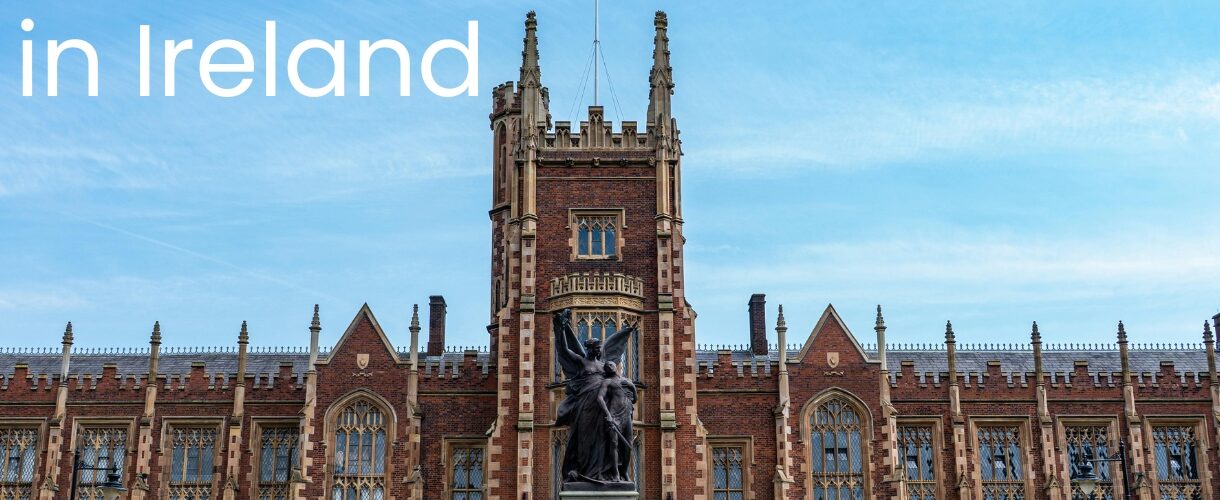
Ireland has become an increasingly important destination for students looking for internationally recognised education in an English-speaking European country. For the 2026–27 academic year, students can choose from established research universities and institutions known for areas such as technology, business, engineering, medicine, data science and the humanities.
The best universities in Ireland offer different academic strengths, campus environments and locations, so choosing a university should involve more than looking at a global ranking. Trinity College Dublin, University College Dublin, University College Cork, University of Galway, University of Limerick and Dublin City University are among the Irish institutions appearing prominently in the latest QS World University Rankings.
This guide explores these universities, their academic profiles, popular study areas, admission considerations, costs, scholarships, student visa requirements and post-study opportunities for international students.
Why Study at a University in Ireland?
Ireland offers international students access to an English-speaking higher education system within the European Union. Its universities also have strong links with research, technology and industry.
Some important reasons students consider Ireland include:
- English-medium education: Most higher education programmes for international students are taught in English.
- Globally recognised institutions: Several Irish universities appear in major international rankings.
- Research opportunities: Ireland has a strong research ecosystem across science, technology, medicine, business and other disciplines.
- Industry connections: Ireland has a significant presence of multinational companies, particularly in technology, pharmaceuticals, financial services and other sectors.
- International student communities: Leading universities attract students and researchers from around the world.
- Post-study opportunities: Eligible graduates may be able to use Ireland’s Third Level Graduate Programme to remain in the country for a period after completing their studies, subject to the applicable conditions.
Ireland can therefore be particularly relevant for students who want to combine an internationally recognised qualification with exposure to a European academic and professional environment.
Best Universities in Ireland for 2026-27
The following universities are among the leading Irish institutions featured in the latest QS World University Rankings 2027. The rankings should be treated as one comparison point rather than the sole basis for selecting a university.
| University | City | QS World University Rankings 2027 |
|---|---|---|
| Trinity College Dublin | Dublin | 75 |
| University College Dublin | Dublin | =100 |
| University College Cork | Cork | 220 |
| University of Galway | Galway | 275 |
| University of Limerick | Limerick | =388 |
| Dublin City University | Dublin | 408 |
Trinity College Dublin
Trinity College Dublin, the University of Dublin, is one of Ireland’s oldest universities, founded in 1592. Its central Dublin campus and broad academic offering make it a major choice for international students.
Trinity offers undergraduate and postgraduate programmes across areas including arts and humanities, business, law, engineering, science, mathematics and health sciences. The university also reports a highly international student and staff community.
For the 2027 QS World University Rankings, Trinity is ranked 75th globally. It also has strong subject-level representation, with the university reporting that it ranks in the global top 100 in 22 subjects in the QS 2026 subject rankings.
Students considering Trinity should review the requirements for their specific course because academic and English-language requirements can differ between programmes.
University College Dublin
University College Dublin, commonly known as UCD, is a major research university located in Dublin.
UCD is ranked =100 in the QS World University Rankings 2027. The university offers a wide selection of undergraduate and postgraduate programmes and has a substantial international student population.
UCD can be considered by students interested in disciplines ranging from business and computer science to engineering, science, social sciences, arts and health-related fields.
For graduate applications, UCD states that requirements and supporting documents vary according to the course. Students should therefore check the individual programme listing rather than relying on a general university-wide requirement.
University College Cork
University College Cork, or UCC, is a research-led university located in Cork.
UCC is ranked 220th in the QS World University Rankings 2027. It offers programmes across areas including arts, business, law, medicine, health, science, engineering and food science.
The university has an international student community and research strengths spanning areas such as technology, health, sustainability and food science. Its location in Cork also provides an alternative to studying in Dublin.
UCC publishes detailed budget guidance for students, including accommodation, food, transport and other living expenses. Costs can vary significantly depending on accommodation type and personal spending patterns.
University of Galway
The University of Galway is a research-focused institution located in Galway on Ireland’s west coast.
It is ranked 275th in the QS World University Rankings 2027. The university has academic strengths across areas including engineering, science, business, medicine, nursing, health, data science, marine research and the creative industries.
Its location provides a different student experience from Dublin, while the university’s research activity gives students opportunities to engage with a broad range of academic disciplines.
University of Limerick
The University of Limerick is an internationally focused university known for its emphasis on innovation, research and practical learning.
It is ranked =388 in the QS World University Rankings 2027. The university also highlights its undergraduate placement opportunities, with many students undertaking placements as part of their degree programmes.
For students who value practical experience alongside academic study, course-specific placement opportunities can be an important factor to investigate before applying.
Dublin City University
Dublin City University, or DCU, is a comparatively young university based in Dublin.
DCU is ranked 408th in the QS World University Rankings 2027. The university describes itself as an innovative institution focused on transforming lives and societies and offers programmes across undergraduate and postgraduate levels.
Its Dublin location can be relevant for students who want to study close to Ireland’s largest concentration of companies, organisations and professional opportunities.
Comparing the Top Universities in Ireland
Rather than asking which university is universally the best, students should compare institutions according to their course, academic profile, location, budget and career plans.
| University | Location | Useful factors to investigate |
|---|---|---|
| Trinity College Dublin | Dublin | Research, broad subject choice, central-city location |
| University College Dublin | Dublin | Broad programme portfolio, research and international environment |
| University College Cork | Cork | Research, health, science, engineering and business |
| University of Galway | Galway | Engineering, science, medicine, data and research |
| University of Limerick | Limerick | Practical learning and placement opportunities |
| Dublin City University | Dublin | Innovation, industry-oriented programmes and Dublin location |
The appropriate choice depends on the student’s intended programme. A university with a lower overall global ranking may still offer a particularly relevant course, research group, placement structure or location for a specific student.
Popular Courses to Study in Ireland
Ireland offers programmes across a wide range of disciplines. International students commonly explore areas such as:
- Computer Science and Information Technology
- Artificial Intelligence and Data Science
- Business and Management
- Finance and Accounting
- Engineering
- Pharmaceutical and Life Sciences
- Medicine and Health Sciences
- Biotechnology
- Cybersecurity
- Digital Marketing
- Supply Chain and Operations
- Law
- Arts and Humanities
Course availability, curriculum, entry requirements and tuition fees differ between universities. Students should compare individual programme pages before making an application.
Admission Requirements for International Students
Admission requirements depend on the university, level of study and programme.
Applicants may need to provide:
- Academic transcripts and certificates
- Proof of previous qualifications
- English-language test results where required
- Personal statement or statement of purpose
- Letters of recommendation for applicable programmes
- CV or résumé for selected postgraduate courses
- Passport or identification documents
- Course-specific test scores or portfolios where applicable
English-language requirements are not necessarily identical across universities or courses. For example, published requirements for Trinity, UCC and DCU can differ depending on the level and programme.
Students should therefore check the exact requirements for their chosen course before submitting an application.
Cost of Studying in Ireland
The total cost of studying in Ireland depends on the university, programme, accommodation, lifestyle and location.
International students should budget for:
- Tuition fees
- Accommodation
- Food and groceries
- Local transportation
- Health or medical insurance requirements
- Study materials
- Personal expenses
- Visa and immigration-related costs where applicable
As an immigration requirement, students on eligible programmes who require a visa generally need to demonstrate access to approximately €10,000 for a one-year course as evidence of living-cost support, in addition to course fees. For shorter eligible stays, the applicable financial requirement can be calculated at approximately €833 per month, subject to the current immigration rules.
This immigration financial requirement should not be treated as a complete estimate of what an individual student will actually spend.
Accommodation can also vary considerably between cities and housing types. Dublin, for example, can have different housing costs from cities such as Cork, Galway or Limerick.
Scholarships for International Students
Scholarships can help reduce the overall cost of studying abroad, but eligibility and award values vary by university, programme, nationality and academic profile.
Students should look for:
- University-funded scholarships
- Merit-based scholarships
- Country-specific awards
- Programme-specific scholarships
- Research funding for eligible postgraduate students
- External scholarships and education grants
For example, Trinity College Dublin offers Global Excellence Undergraduate Scholarships for eligible international students. For the 2026/27 intake, the university states that these scholarships can provide approximately €2,000 to €5,000, depending on the applicant’s region, as a reduction against first-year tuition fees.
Scholarship deadlines can differ from programme application deadlines, so students should check both carefully.
Ireland Student Visa and Work Opportunities
Students from outside the EEA and Switzerland should carefully review Ireland’s current immigration requirements before travelling.
For study programmes lasting more than three months, students must choose an eligible programme. Ireland’s immigration guidance currently refers to eligible programmes under the Interim List of Eligible Programmes and the TrustEd Ireland framework.
For a long-term study visa, applicants can generally apply up to three months before their planned travel date. The application involves providing information and documentation relating to the course, fees, academic ability, English-language ability and financial circumstances.
International students on Stamp 2 conditions may have permission to work 20 hours per week during term time and 40 hours per week during specified vacation periods, subject to the applicable immigration conditions.
Post-Study Opportunities
Ireland also has a Third Level Graduate Programme for eligible graduates.
Under the current immigration guidance, eligible graduates with an Irish Level 8 award may receive a 12-month extension, while eligible graduates with Level 9 or higher qualifications may receive up to 24 months, subject to the programme’s conditions and applicable limits.
This permission is intended to allow eligible graduates to seek graduate-level employment and pursue the relevant employment permission routes.
Students should not assume that graduation automatically results in a job or long-term immigration status. Eligibility depends on the individual’s qualification, immigration history and the requirements applicable at the time.
How to Choose the Right Irish University
A strong university choice should match your individual academic and career goals.
Consider these factors before applying:
- Start with the course: Compare modules, curriculum, duration and specialisations.
- Check academic requirements: Confirm that your previous qualification meets the programme’s entry criteria.
- Compare total costs: Consider tuition, accommodation and everyday expenses rather than tuition alone.
- Look at location: Dublin, Cork, Galway and Limerick offer different living and student environments.
- Research career opportunities: Check placements, internships, industry connections and career services.
- Review scholarships: Check eligibility and deadlines before submitting your application.
- Understand immigration requirements: Confirm the latest visa, financial and student-permission rules.
- Compare application timelines: Some programmes may have earlier or course-specific deadlines.
Global rankings can provide useful context, but they should be combined with programme-level information when making a university decision.
This article is for educational and informational purposes. University admission requirements, tuition fees, visa rules, scholarships, immigration policies and post-study opportunities may change. Students should verify the latest information with the relevant university, government authority, immigration department, embassy or official source before making a decision.

Frequently Asked Questions
Which are the best universities in Ireland for international students?
Trinity College Dublin, University College Dublin, University College Cork, University of Galway, University of Limerick and Dublin City University are among the prominent Irish universities in the latest QS World University Rankings. The right choice depends on the student’s course, budget, location preference and career objectives.
Is Ireland good for international students?
Ireland offers English-medium higher education, internationally recognised universities and a large international student community. Students should also consider accommodation availability, living costs, course requirements and immigration conditions before choosing Ireland.
How much money do students need to show for an Ireland student visa?
For academic courses beginning under the current rules, visa-required students generally need to demonstrate access to approximately €10,000 for a one-year course as evidence of living-cost support, in addition to the applicable course fees. Requirements can differ for shorter courses.
Can international students work while studying in Ireland?
Eligible non-EEA students holding Stamp 2 permission may generally work 20 hours per week during term time and 40 hours per week during specified vacation periods, subject to the applicable conditions.
Can students stay in Ireland after graduation?
Eligible graduates may qualify for the Third Level Graduate Programme. Current guidance provides for a 12-month period for eligible Level 8 graduates and up to 24 months for eligible Level 9 or higher graduates, subject to the programme’s conditions.
What English-language test is required for Irish universities?
Requirements vary by university, programme and level of study. IELTS, TOEFL, PTE Academic and other accepted tests may be listed by individual universities. Students should always check the English-language requirements for their specific course.
Should students choose a university based only on its ranking?
No. Rankings can be useful for comparison, but students should also evaluate course content, entry requirements, tuition fees, location, accommodation, placements, research opportunities, scholarships and career support.
Key Takeaways
The best universities in Ireland for 2026–27 include globally recognised institutions such as Trinity College Dublin and University College Dublin, alongside strong research and teaching universities including University College Cork, University of Galway, University of Limerick and Dublin City University.
The right university ultimately depends on your chosen course, academic background, financial plan, preferred city and long-term goals. Compare individual programmes carefully, check current admission and immigration requirements, and prepare your application well ahead of the relevant deadlines.
If Ireland is part of your study-abroad plans, building your shortlist around the course first and university second can help you make a more informed decision.
Start Your Study Abroad Journey
If you are planning to study abroad and need help understanding your options, you can connect with a LetzStudy counsellor for personalised guidance. We can help you explore suitable countries, universities, courses, eligibility requirements, application steps and other aspects of your study-abroad journey based on your academic profile and goals.
Book a Free Consultation
