



Supply chain is no longer just a job in the back office. It is at the heart of how businesses around the world stay alive, grow, and compete. Every choice you make about moving raw materials or delivering finished goods has an effect on cost, speed, and customer trust. That’s why so many students are going abroad to study Supply Chain. You get to work with people from all over the world, learn about real-world systems, and get access to international job markets that value these skills. This is what it really means. Supply Chain is a field worth looking into if you want a job that combines strategy, analytics, technology, and the ability to move around the world.
What is the supply chain and why is it important around the world?
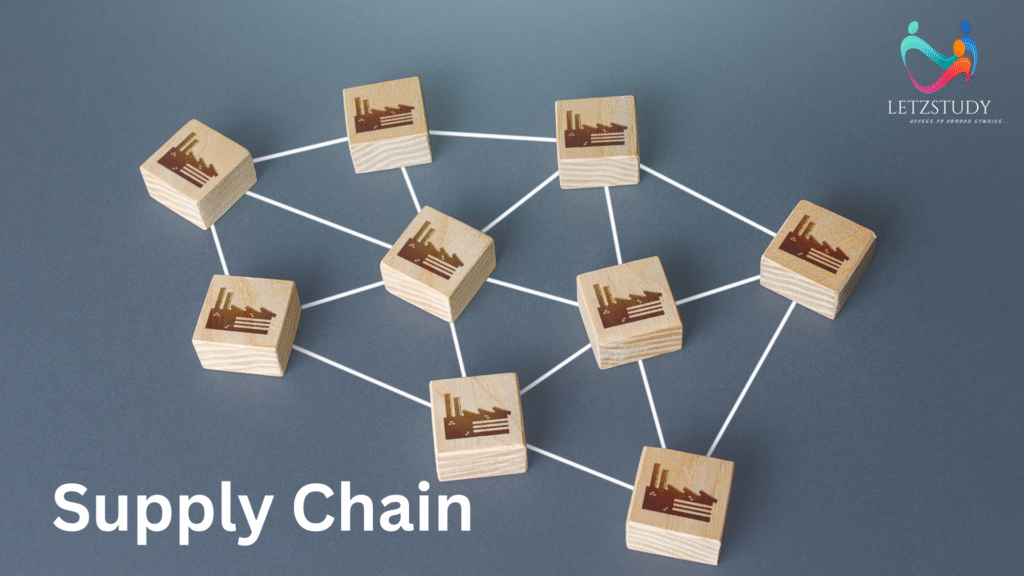
Supply Chain includes the whole process of moving goods, data, and money from suppliers to customers.
It links production, logistics, purchasing, inventory, and shipping.
In a global economy, even small problems affect many countries and industries.
Main Parts of the Supply Chain
Buying and Sourcing
This is all about choosing suppliers, bargaining over prices, and keeping track of contracts.
Good sourcing choices lower risk and raise profits.
Operations and Manufacturing
This is where planning and doing come together.
Students learn how to plan for capacity, control quality, and improve processes.
Distribution and Logistics
This includes moving goods, storing them, and delivering them the last mile.
Here, efficiency has a direct impact on how happy customers are.
Planning for demand and stock
It’s very important to predict demand and keep stock levels in check.
Too much stock ties up cash. Too little makes things take longer.
Why You Should Study Supply Chain Abroad
You get more than just a degree when you study Supply Chain abroad.
It puts you inside real-world global systems that businesses use.
Getting to know global supply networks
You look at real examples of trade between countries and suppliers from different countries.
It’s hard to get this point of view in your area.
Curriculum that fits with the industry
Many universities around the world create Supply Chain programs with help from businesses.
Tools like SAP, Oracle, and advanced analytics work well with the courses.
More freedom in your career
A degree from a university with a global reach opens doors in many countries.
Graduates work in logistics, consulting, manufacturing, and technology.
Best Places to Study Supply Chain Outside of the US
America
The US has the best Supply Chain programs that use analytics and technology.
Strong ties with Fortune 500 companies make internships easier.
Germany
Germany is known for precision manufacturing and process excellence.
Programs focus on engineering, operations, and accuracy.
The UK
UK universities focus on strategic supply chain management and sustainability.
Programs are shorter and industry-focused.
Canada
Canada offers balanced programs with theory and hands-on experience.
Post-study work options attract international students.
The Most Popular Supply Chain Courses Abroad
Master’s degree in Supply Chain Management
The most common choice.
Covers global operations, logistics, analytics, and strategy.
MBA with a focus on Supply Chain Management
Ideal for leadership roles.
Combines management, finance, and supply chain decisions.
Operations and Logistics Management Programs
Execution-focused programs.
Best for hands-on operational roles.
Eligibility and Academic Background
Academic Requirements
Engineering, business, commerce, and economics backgrounds work well.
Some universities accept other backgrounds with relevant experience.
Work Experience
Not mandatory.
Even one year strengthens your profile.
English Language Tests
IELTS or TOEFL is usually required.
Score requirements vary by country and university.
What You Learn in a Supply Chain Degree
Data and Analytics Skills
Forecasting, optimisation, and performance measurement.
Data-driven decisions are core to modern supply chain roles.
Systems Thinking and Technology
Hands-on exposure to ERP systems and automation tools.
Bridges classroom learning with real-world operations.
Problem Solving Under Pressure
Real-time disruptions demand fast thinking and strategy.
Cross-Cultural Communication
Working with global teams improves collaboration and clarity.
Job Opportunities After Studying Supply Chain Abroad
Entry-Level Roles
Supply Chain Analyst
Logistics Coordinator
Procurement Executive
Mid-Level Roles
Supply Chain Manager
Operations Manager
Demand Planner
Senior and Strategic Roles
Supply Chain Consultant
Head of Global Operations
Chief Supply Chain Officer
Salary Expectations for Supply Chain Professionals
Entry-Level Pay
Strong starting salaries compared to many fields.
Analytics skills accelerate growth.
Mid-Career Growth
Experience significantly increases compensation.
Global exposure commands higher pay.
Long-Term Stability
Every industry needs supply chain roles.
The field remains resilient.
Cost of Studying Supply Chain Abroad
Tuition Costs
Public universities are generally affordable.
Private institutions offer stronger industry ties.
Living Expenses
Major cities cost more.
Smaller towns reduce expenses.
Return on Investment
High demand leads to strong ROI.
Many students recover costs within a few years.
How to Choose the Right University for Supply Chain
Curriculum Depth
Focus on analytics, technology, and strategy.
Avoid overly theoretical programs.
Industry Connections
Internships and live projects matter more than rankings.
Career Support
Strong placement teams and alumni networks are crucial.
What is the job of a supply chain manager?
Supply chain management controls how products move through manufacturing, logistics, and delivery. It involves planning, sourcing, production, transportation, and quality consistency while keeping operations sustainable.
Why It Matters
Global markets are deeply connected. Companies rely on AI, data analytics, cloud platforms, and dashboards to reduce risk and move faster. Over 75 percent of companies now consider big data essential to supply chains. (Global Trade Magazine)
6 Things That Often Go Wrong in the Supply Chain
1. Weather and Climate Disruptions
Extreme conditions delay transport and increase costs.
2. Labour and Skill Shortages
High vacancy rates affect warehouses and logistics hubs.
3. Poor Technology Integration
Disconnected systems reduce real-time visibility.
4. Trade Barriers and Geopolitical Tensions
Tariffs and disputes increase sourcing risk.
5. Cybersecurity Threats
Nearly one-third of businesses report cyber disruptions.
6. Demand Volatility
Traditional forecasting struggles without AI support.
13 Practical Tips for Managing Supply Chains
- Use real-time dashboards
- Invest in AI and digital tools
- Diversify suppliers
- Scenario planning
- Automate repetitive tasks
- Continuous team training
- Leadership alignment
- Transparent supplier collaboration
- Sustainability focus
- Predictive analytics
- Cross-functional collaboration
- Agile practices
- Regular KPI reviews
What Experts and Influencers Say
Strategic planning tied to risk management is now a top priority. Over half of companies ranked it as their main defense against disruption.
Supply chain educators emphasize real-world experience alongside theory. Workforce training will be critical.
Key Industry Statistics
• AI-driven supply chains reduce costs and risk
• Rising logistics costs, talent shortages, and cyber risks remain top concerns
Three Expert Articles
- Hau L. Lee – Triple-A Supply Chain
- Chopra & Meindl – Matching Supply with Demand
- Lewis et al. – What Is Wrong with Supply Chain Planning?
Two Expert Quotes
Hau L. Lee:
“The key to a successful supply chain is flexibility and collaboration.”
Sunil Chopra:
“What matters is how decisions impact the entire network.”

How LetzStudy Helped Three Students
Rohan Shetty – Bengaluru
Mechanical engineer with shop-floor experience. Guided toward Germany-based Supply Chain programs and now working part-time in automotive logistics.
Ananya Rao – Mysuru
Commerce graduate guided into UK demand planning programs with strong industry links. Now working on live retail supply chain projects.
Karthik Hegde – Hubballi
Warehouse professional transitioned into Canadian applied Supply Chain programs with co-op exposure.
Universities regularly update their fees, eligibility, and policies. While we aim to keep this content accurate, readers should always check official sources for the latest information.
If you want to study Supply Chain abroad and understand the right country, course, and job prospects, connect with LetzStudy for honest, profile-based guidance.
For more information, connect us on LinkedIn, and for daily updates, follow us on Instagram.
Universities regularly update their fees, eligibility, and policies. While we aim to keep this content accurate, readers should always check official sources for the latest information.
