


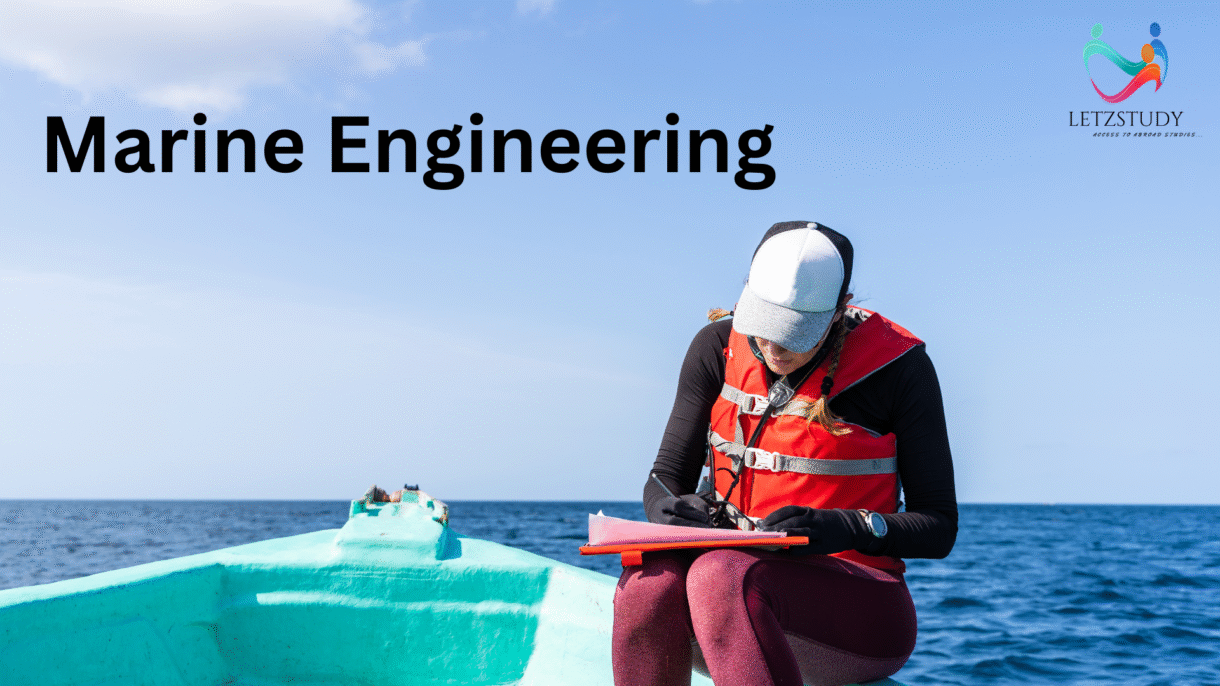
Marine engineering isn’t a desk job. It’s hands-on, technical, and made for people who want to take on real responsibilities early in their careers. This field is great for people who want to learn about engines, power systems, ships, and how huge ships can travel across oceans without stopping. Studying Marine Engineering in another country gives you access to advanced simulators, international certifications, and global shipping exposure that many local programs just can’t match. In other words, it means better training, a better chance of getting a job, and a job that literally moves the world. Let’s get right to the point and break it down so you can decide if Marine Engineering abroad is the right choice for you.
What Is Marine Engineering?
Marine engineering is all about designing, running, maintaining, and managing the machinery and systems on ships.
The Main Duties of a Marine Engineer
Marine engineers are in charge of everything below deck that makes a ship work.
They are in charge of safety gear, generators, propulsion systems, boilers, and fuel systems.
They fix problems that happen at sea, often under a lot of pressure and time limits.
Marine Engineers’ Workplaces
Marine engineers do more than just work on ships.
They work on naval ships, oil tankers, cruise ships, cargo ships, and offshore rigs.
Many of them also work on land later in ports, shipyards, maritime companies, and energy companies.
Why Go Abroad to Study Marine Engineering?
Studying Marine Engineering abroad gives you structured training that meets international maritime standards.
Certifications and Compliance Around the World
Foreign universities pay close attention to the IMO and STCW standards.
This makes sure that your degree is accepted in most shipping countries.
It also makes it easier to get licenses and keep records of sea time.
Advanced Infrastructure and Training
Schools and businesses in other countries spend a lot of money on marine labs and engine simulators.
You learn by doing, not just by reading.
This gives you confidence before you even get on a boat.
Strong Ties to the Industry
A lot of universities in other countries work directly with shipping companies.
This helps with finding cadetship placements and training on board.
People who are exposed to things early on often get promoted faster later on.
Best Places to Study Marine Engineering Abroad
Every country has something unique to offer. What you choose depends on your budget, career goals, and plans for a visa.
The UK
The UK is the best place in the world to learn about the sea.
Universities here offer programs that the MCA has approved.
Graduates get a lot out of having a good academic reputation and being known around the world.
Germany
Germany focuses on precision in engineering and learning by doing.
Most of the time, public universities don’t charge much or any tuition.
Programs focus on automation, ship design, and being environmentally friendly.
Australia
Australia has high standards for maritime safety.
Graduates can get work visas after they finish school.
The country is perfect if you want to live there for a long time.
Norway
Norway is known for its green shipping and new ideas in the maritime industry.
The programs focus on renewable marine energy and offshore engineering.
It is very technical and based on research.
Requirements to Study Marine Engineering Abroad
The basics are the same in all countries, but the requirements for eligibility are different.
Academic Requirements
You need to do well in Physics, Chemistry, and Math.
Most colleges and universities want you to have finished 12th grade or the equivalent.
Some programs may require tests to get in.
English Language Requirements
Most countries require either the IELTS or TOEFL.
The average IELTS score needed is between 6.0 and 6.5.
Some colleges don’t require this if you went to school in English before.
Health and Fitness
You need to get medical clearance to work in marine engineering.
They check your eyesight, hearing, and overall health.
This is not up for discussion for careers on board.
How the Course Is Set Up and What It Covers
Marine engineering programs include a mix of theory, lab work, and hands-on training.
Core Subjects You Will Learn
• Systems for moving boats
• Thermodynamics and engines that use heat
• Control and electrical systems
• The basics of naval architecture
• Rules and safety for marine activities
These subjects get you ready for working on ships in the real world.
Training in the Real World and Sea Time
Most programs require sea training.
This is where what you learn in school becomes real.
Sea time is very important for getting certified and getting promoted.

Cost of Studying Marine Engineering Abroad
Costs vary a lot from one country and school to another.
Tuition Fees
The UK and Australia have higher tuition ranges.
Germany and Norway have cheap or free schools.
Average yearly fees are between INR 6 and 20 lakhs.
Cost of Living
The cost of living varies by city and way of life.
Students should plan how much money they will need for housing, food, insurance, and transportation.
In most countries, people can work part-time.
Marine Engineering Student Scholarships
Scholarships can help a lot with money problems.
Government Scholarships
A lot of countries give out scholarships based on merit.
These are hard to get, but they are worth applying for.
College-Specific Scholarships
Many colleges and universities give students discounts on their tuition.
Some are given out automatically based on grades.
Industry Sponsorships
Some shipping companies pay for cadets’ training.
This could mean help with tuition and a promise of a job.
Job Opportunities After Studying Marine Engineering Abroad
Marine Engineering opens doors all over the world.
Roles on Board Ships
• Junior Engineer
• Fourth Engineer
• Second Engineer
• Head Engineer
Promotions are based on experience and a set structure.
Shore-Based Jobs
• Technical manager
• Ship surveyor
• Port engineer
• Maritime safety officer
These jobs are stable and offer long-term growth.
Expected Salary
Compared to many other fields, entry-level salaries are good.
Marine engineers with experience get paid tax-free on ships that travel around the world.
The more rank and type of vessel you have, the more money you make.
Benefits of Working in Marine Engineering
This field rewards hard work, skill, and discipline.
Global Travel
Marine engineers work in many different countries and oceans.
Your job doesn’t have to be in one place.
Early Responsibility
You are in charge of important systems early on in your career.
This speeds up leadership development and learning.
Long-Term Job Security
Shipping is important for trade around the world.
That demand is not slowing down.
Challenges You Should Know About
Marine engineering is rewarding, but it’s not easy.
Time Away From Home
Long voyages mean spending a lot of time at sea.
Not everyone can live this way.
High Responsibility
Mistakes can cost a lot.
Engine failures affect safety and efficiency.
Physical and Mental Demands
The workplace can be stressful.
Discipline and adaptability matter.
Is Marine Engineering Abroad Right for You?
If you like working with technology and solving real-world problems, marine engineering fits well.
You must be comfortable with responsibility and strict rules.
This path works if you want global exposure and strong income potential.
It may not suit people who prefer fixed routines or office work.
What Marine Engineering Is All About
Marine engineering focuses on designing, building, operating, and maintaining mechanical systems on ships, offshore platforms, and marine vessels. Engines, propulsion, HVAC, fuel systems, pumps, and power generation all fall under this field. (boatsgeek)
This field blends mechanical engineering, electrical systems, materials science, and modern digital automation.
Main Duties
• Engine room systems and generators
• Diesel, dual-fuel, and LNG propulsion
• Environmental compliance and ballast water systems
• Monitoring using sensors and predictive maintenance
• Troubleshooting emergencies at sea
6 Things That Often Go Wrong in Marine Engineering
- Engine overheating due to cooling system issues (Neptunus Power)
- Lubrication failure from worn oil or clogged filters
- Fuel contamination reducing combustion efficiency
- Turbocharger breakdown from wear or dirt
- Sensor and alarm failures causing delayed response
- Environmental and regulatory lapses leading to fines or detentions (Sperton)
13 Useful Tips for Managing Marine Engineering
- Prioritize predictive maintenance
- Use sensor data for early detection
- Standardize checklists
- Apply root cause analysis tools (boatsgeek)
- Maintain critical spare parts
- Use digital twins (marinemeoclass.com)
- Conduct IMO compliance audits
- Track KPIs like emissions and downtime
- Invest in VR-based crew training
- Strengthen cybersecurity
- Standardize incident reporting
- Build cross-functional teams
- Make environmental performance a core goal
Marine Engineering Experts and Influencers
• IMO and IACS leaders
• Senior engineers from Maersk, Shell, Chevron
• Academic researchers in marine energy and ocean engineering
• Digital twin and predictive maintenance innovators
What Other People Think
• Physically demanding but rewarding (Reddit)
• Isolation challenges at sea (American Professional Guide)
• Ergonomics need improvement (Reddit)
• Software skills are becoming essential (Reddit)
The Bottom Line
Marine Engineering rewards problem-solvers who understand systems, data, and compliance.
Those who blend engineering with leadership and analytics move into management roles.
Real challenges exist, but real solutions exist too.
Reference Articles
Three Expert Articles
- A Scoping Review on Simulation-Based Design Optimization in Marine Engineering
- Exploring the Current Practices and Future Needs of Marine Engineering Education
- Engineering and Marine Life Interactions
Two Expert Quotes
• Henry Petroski: Science is about knowing, engineering is about doing
• Derek Bok: If you think education is expensive, try not knowing

How LetzStudy Helped Three Students
Arjun Kumar from Mangalore
LetzStudy guided Arjun through university selection, applications, and documentation. He is now studying Marine Engineering in Singapore.
Sneha Rao from Hubli
LetzStudy supported Sneha with IELTS preparation and applications. She earned a scholarship in the Netherlands.
Rakesh Shetty from Udupi
LetzStudy helped Rakesh secure internships through industry-linked universities. He is now interning with a top maritime company.
Universities regularly update their fees, eligibility, and policies. While we aim to keep this content accurate, readers should always check official sources for the latest information.
Connect with LetzStudy today to plan your Marine Engineering journey abroad and book a consultation with our experts!
For more information, connect us on LinkedIn, and for daily updates, follow us on Instagram.
